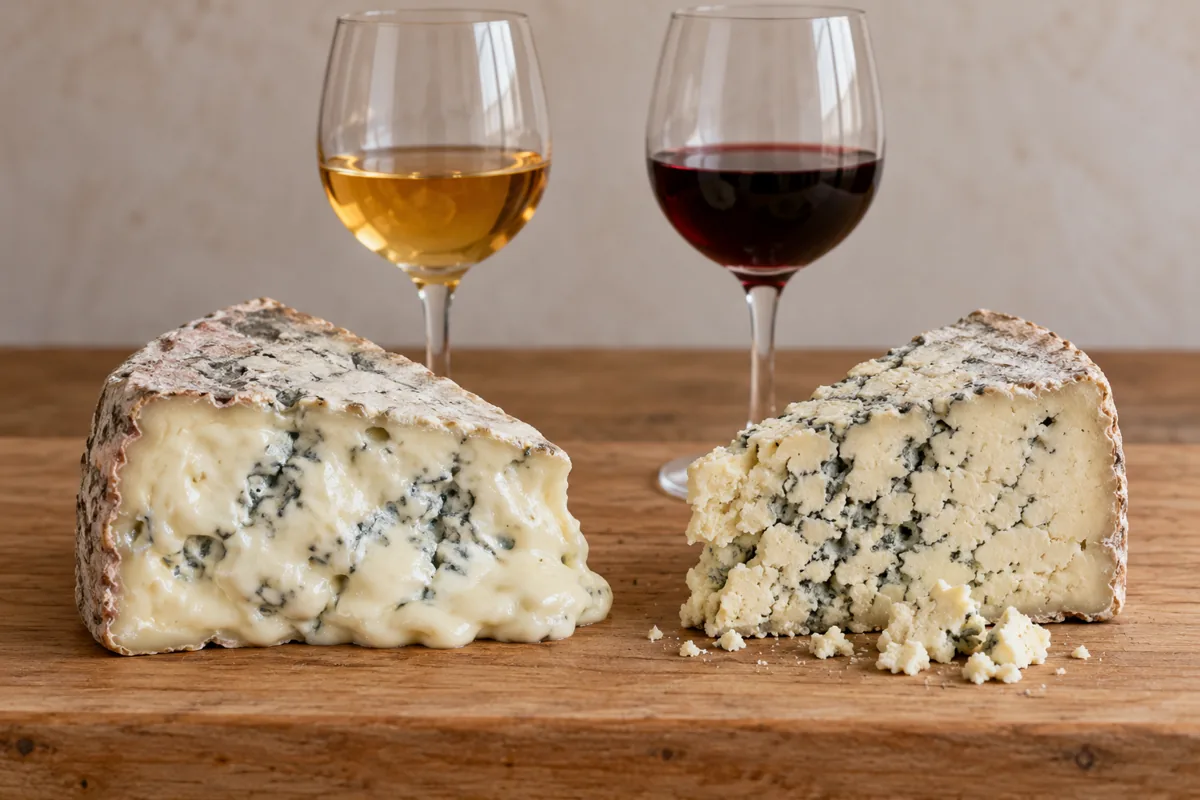
Gorgonzola DOP is sold in two styles, and the wine advice from the consortium that protects its name splits the same way. Its general rule is a wine with softness, savouriness and good freshness, with enough personality to carry the cheese's aroma.
Fiona Beckett and Culture magazine also pick a sweet wine for creamy Gorgonzola, and Beckett has doubts about dry red wine with blue cheese.
In This Article
Which Wine Goes Best with Gorgonzola Dolce?
Passito wines lead the consortium's list for Dolce: wines from grapes picked late in the harvest with a high sugar content. The consortium calls this one of the lesser-known pairings, and one of the most appreciated.
Its two named examples are a Moscato passito liquoroso and a Marsala Vergine, which it says balance the sweetness and leave a finish of dried fruit and spice against the cheese's strong flavour.
The consortium also rates noble-rot wines, made from grapes attacked by a noble mould that concentrates their sugar. In the same passage it lists Riesling, Pinot Bianco, Orvieto Classico, Frascati Superiore, dry Malvasia and Gavi among whites, and Chiaretto del Garda and Lagrein Kretzer among rosés.
xtraWine, an Italian wine retailer, sorts its advice by how long the cheese has aged and not by the Dolce and Piccante names. Its list for a younger Gorgonzola overlaps the consortium's Dolce list on Pinot Bianco, Riesling and rosé wines, and it adds a Barbera, which it would choose in the sparkling style.
Wine writer Fiona Beckett found a Vin Santo, the Antinori Santa Cristina 2008, "really good with the gooey Gorgonzola" at a 2013 tasting, and she adds that late-harvest Muscats also work.
She presents that match as one more case of the rule that puts sweet wines with blue cheese, the same rule behind port with Stilton. Culture magazine's cheese library points the same way for Dolce, naming a Tuscan Vin Santo or a Champagne.
That Vin Santo did not suit the Epoisses on the same cheese board, so the match belongs to the creamy Gorgonzola and not to cheese in general. Beckett adds that other Vin Santos can be tried in place of the Antinori.
In her reply to commenters, Beckett said she could imagine a Mosel Auslese, which one reader described as a sweet Riesling with good acidity, and the Italian sweet whites another reader named, Ramandolo and Verduzzo Friulano, working well too. Riesling is also on the consortium's Dolce list.
For Dolce itself, xtraWine warns against a wine so mild that the cheese's sweetness overpowers it, which fits the consortium's choice of sugar-rich passito wines.
| Pairing | Why It Works |
|---|---|
| Moscato passito liquoroso | The Gorgonzola consortium's first example of a passito wine for Dolce, with a dried-fruit and spice finish. |
| Marsala Vergine | The consortium's second passito-style example for Dolce. |
| Vin Santo | Fiona Beckett's match for gooey Gorgonzola, and Culture magazine's first pick for Dolce. |
| Late-harvest Muscat | Beckett's alternative when Vin Santo is not on hand. |
| Champagne | Culture magazine's sparkling option for Dolce. |
| Riesling, Pinot Bianco or Gavi | Three of the white wines on the consortium's Dolce list. |
Which Wine Goes Best with Gorgonzola Piccante?
For Piccante, the consortium switches to aged red wines of good complexity and structure. Its list runs Barolo, Barbaresco, Carema, Gattinara, Ghemme, Chianti Classico Riserva, Recioto, Amarone and Cabernet.
Beckett is less sure about that direction. She notes that some people favour Barolo with Gorgonzola, but says she is never totally convinced by blue cheese with dry red wine.
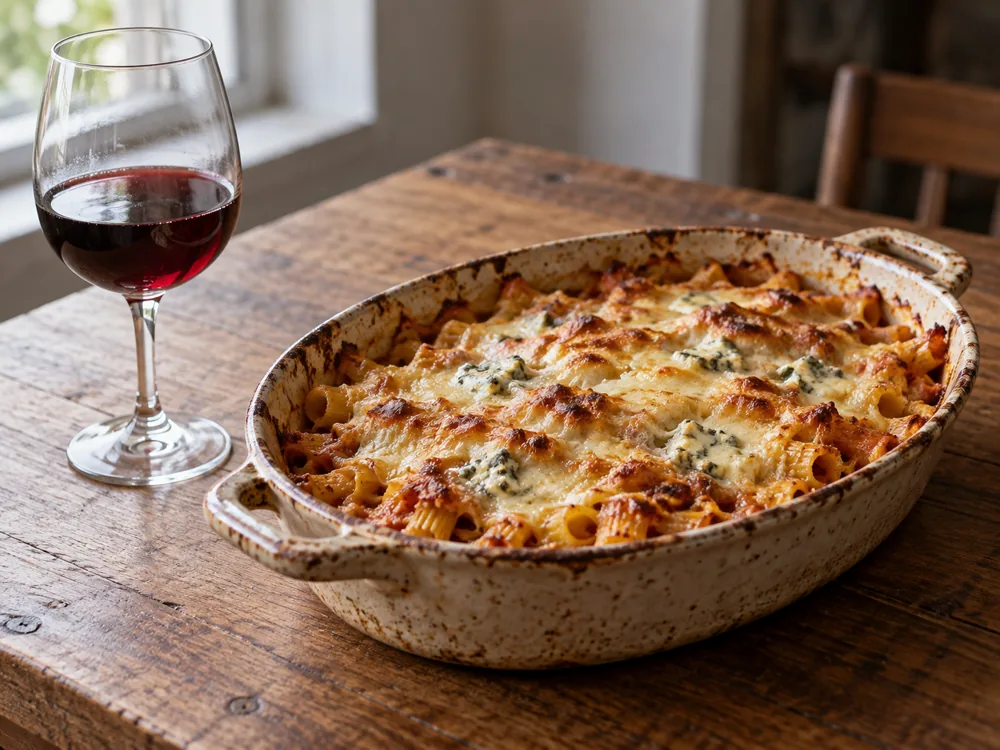
Her exception is Gorgonzola cooked as a pizza topping, on a flatbread or in a baked pasta dish.
Cooked Gorgonzola goes into sauces and creams with butter or cooking cream, for pasta, rice and gnocchi. Wikipedia adds risotto, gnocchi, pasta and polenta, and a steak topping that is sometimes a sauce made with port or another sweet wine.
xtraWine, Culture magazine and Cheese.com also pair red wine with Gorgonzola, each with a different bottle in mind.
xtraWine ties the red to the cheese's age: the more spiciness the cheese gains, the more depth of flavour the wine needs, which is why it names Barolo, Barbaresco and Amarone for the spicier, longer-aged Gorgonzola. It puts Chianti Classico with the younger cheese, where the consortium lists a Chianti Classico Riserva among its aged reds for Piccante.
The Piccante in Culture's Lambrusco pairing was aged 80 days, which is the youngest the DOP rules allow, and the red chosen is a berry-forward Lambrusco, a different style from the aged, structured reds the consortium lists.
If your Piccante is close to that 80-day minimum, Culture's Lambrusco is the red paired with a cheese of that age, while xtraWine keeps Barolo, Barbaresco and Amarone for a longer-aged, spicier Gorgonzola.
| Gorgonzola consortium | Aged, structured reds for Piccante, from Barolo to Cabernet. |
| xtraWine (Italian wine shop) | Barolo, Barbaresco and Amarone for aged, spicier Gorgonzola; sweeter or fortified wines also work, and mild whites get overpowered. |
| Culture magazine with Ambrosi USA | A berry-forward Lambrusco with an 80-day Gorgonzola Piccante. |
| Cheese.com | A red Bordeaux blend or Zinfandel, with Sauternes, for Gorgonzola in general. |
| Fiona Beckett | Unconvinced by dry red with blue cheese unless the cheese is cooked on pizza, flatbread or baked pasta. |
Why Do Dolce and Piccante Need Different Wines?
Dolce and Piccante ripen for different times and must taste different under the Gorgonzola DOP rules, sweet for Dolce and decidedly sharp for Piccante, and the consortium ties its wine advice to that split, saying the two types can guide the choice of bottle.
Under the same rules, both styles are the same blue-veined cheese, made from pasteurised whole cow's milk. Production is limited to provinces of Lombardy and Piedmont in northern Italy, and three wheel types are allowed on sale: Dolce, Piccante and a smaller piccola piccante.
| Point | Dolce | Piccante |
|---|---|---|
| Ripening (DOP rules) | 50 to 150 days | 80 to 270 days; 60 to 200 days for the smaller piccola piccante |
| Flavour (DOP rules) | Sweet | Decidedly sharp |
| Texture (Wikipedia) | Buttery | Firm and crumbly |
| Wheel weight (DOP rules) | 9 to 13.5 kg | 9 to 13.5 kg; 5.5 to under 9 kg for piccola piccante |
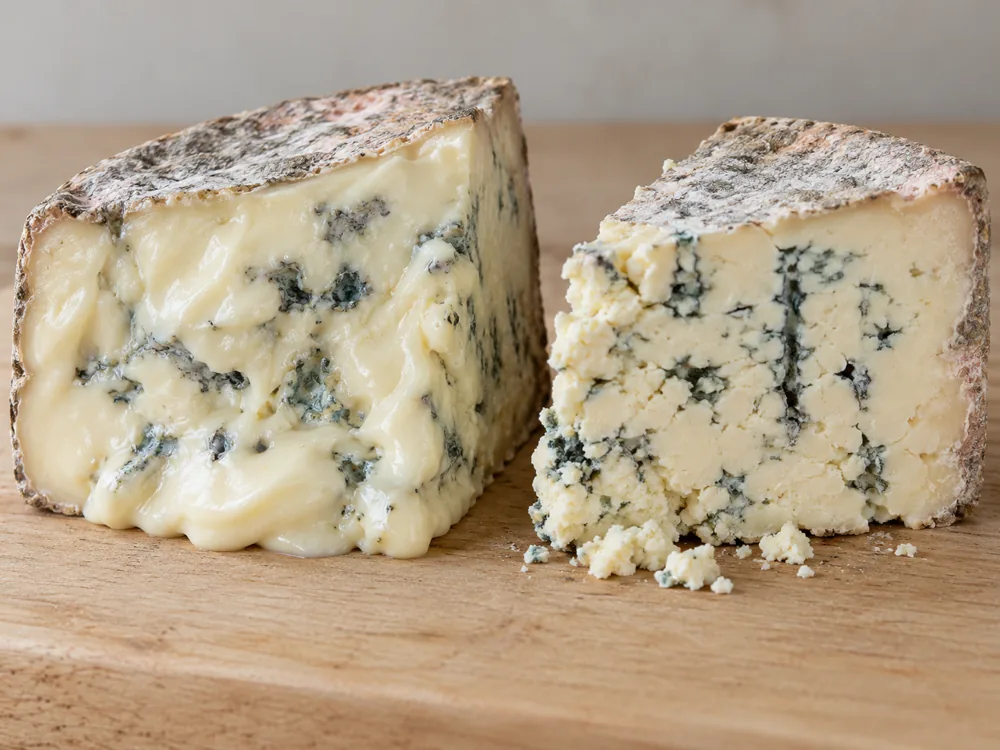
In Wikipedia's account, ageing sets the consistency and the cheese gets firmer as it ripens. It also says Dolce can taste less salty, with a slightly sweet finish.
How Can You Tell Which Style Is in the Pack?
You cannot tell the style from the age on the pack, because the DOP ripening ranges overlap between 80 and 150 days. Wikipedia and Cheese.com both put typical ripening at three to four months, roughly 90 to 120 days, which sits inside both ranges.
What separates the styles is the flavour the rules require, and the packaging carries one word to show it. The word "piccante" must appear beside or below the Gorgonzola name, in smaller type, for both Piccante wheel types, and the rules ask for no matching word on Dolce.
At a cheese counter, a portion cut to order is allowed only if the embossed aluminium foil remains visible on it. That foil carries the DOP name, the EU symbol, the consortium's embossed mark that vouches for origin and traceability, and the word piccante where it applies.
Pre-packed portions carry the same wording on the primary pack, in its main field of view, and can come without foil when a control body has certified them.
Wikipedia and Cheese.com give naturale and montagna as other names for Piccante, which is one more reason to look for the DOP's own word on the foil.
Piccante is fairly mild unless it has aged long in xtraWine's description, which calls it the better-known style and Dolce the sweeter one, whereas the DOP rules require a decidedly sharp flavour for Piccante.
xtraWine sorts its advice by age, so it may be using the names loosely. The word on the foil is the one to check before you choose between the two wine lists.
The DOP name covers more than the pack wording: the rules put the dairy farms, the making and the ripening inside the production zone, and require at least half of the cows' feed dry matter, counted yearly, to come from it.
Gorgonzola made outside the European Union is a family of blue cheeses inspired by the Italian original, and the United States has its own FDA definition of the name. The DOP rules and the consortium's wine lists describe the Italian cheese only, so look for the DOP name on the pack before you follow them.
A DOP wedge should also show the paste and rind the rules describe: white to straw-coloured paste marbled with blue-green or grey-blue veins, under a grey and/or pinkish rind, from a wheel 20 to 32 cm across.
Where Does Gorgonzola's Strong Flavour Come From?
The blue starts in the vat: under the DOP rules the milk is seeded with lactic ferments, a suspension of Penicillium spores and selected yeasts, then set with calf rennet at 28 to 36°C. The Penicillium strains that develop during maturation give the blue-green and grey-blue veining.
The mould spreads through air channels: metal rods are pushed in and pulled out during ageing, and the channels they open let the spores grow into veins. The DOP rules list this piercing of the paste among the traditional steps handed down in the production zone.
Dry salting comes next, and the rules require it to continue for several days at 18 to 24°C. Wikipedia says either style can be quite salty, with a bite from the blue veining.
Ripening then takes place between -1 and 7°C at 85 to 100% relative humidity, the rules say, and the finished cheese must hold at least 48% fat in its dry matter.
Wikipedia and Cheese.com give 25 to 35% fat, and that range cannot be compared directly with the rules' dry-matter figure. xtraWine puts the richness down to unskimmed milk, which matches the whole milk the rules require.
How Should You Serve Gorgonzola with Wine?
Take your Gorgonzola out of the fridge at least half an hour before you eat it, the consortium advises, so its aroma and flavour come through.
The CDC sets the ceiling for perishable food: no more than 2 hours out of your refrigerator, or 1 hour above 90°F, with the refrigerator at 40°F or below.
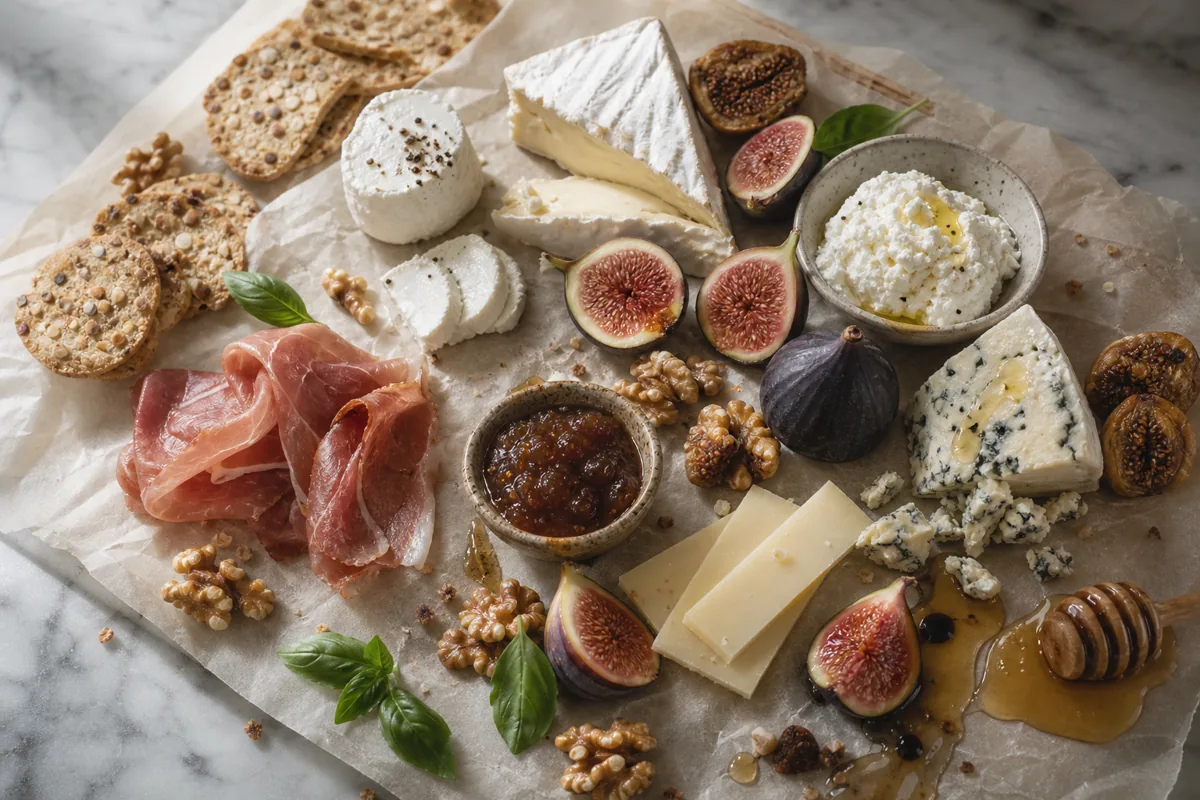
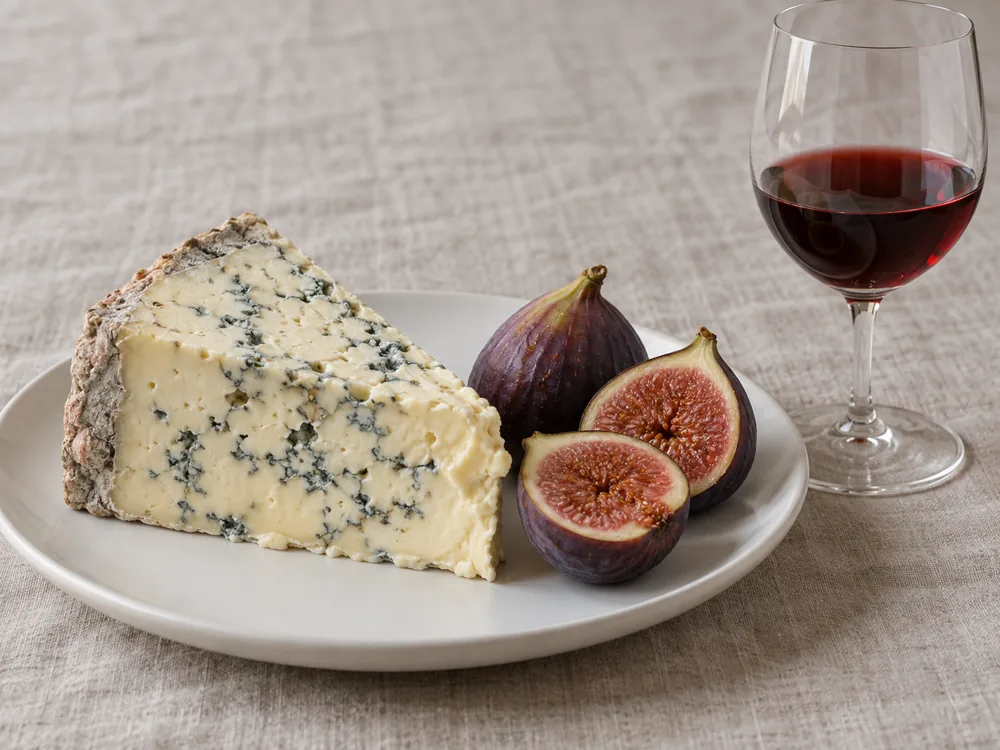
Beckett's suggestions change the bottle with the course. With figs as a cheese course, she suggests a sweet red such as Recioto della Valpolicella or a Maury from southern France.
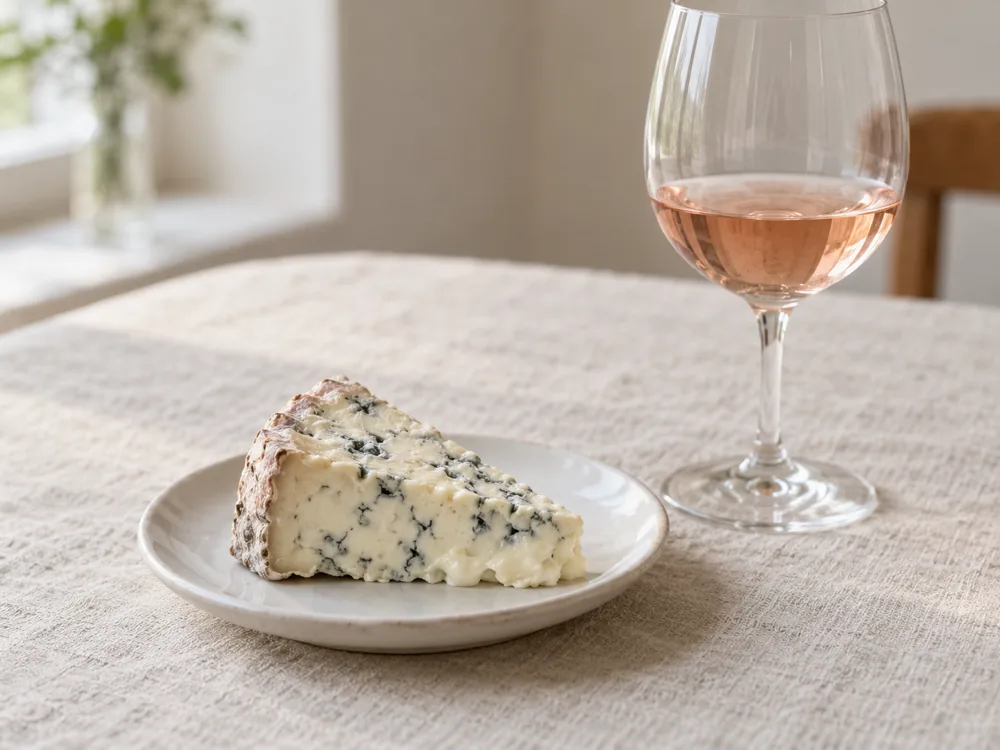
When Gorgonzola opens the meal as a starter, she suggests a dry white or rosé with a touch of sweetness, such as a Malvasia.
Recioto is on both lists: the consortium names it among aged reds for Piccante, and Beckett suggests Recioto della Valpolicella for a Gorgonzola and fig course. As our own inference, it is the bottle we would try first when a board carries Dolce and Piccante.
The consortium's storage advice calls Gorgonzola a living food that keeps maturing, so it recommends buying reasonable amounts and eating them within a few days. Piccante, it says, keeps longer than Dolce without changing its characteristics.
The consortium says the rind is often the cause of the penetrating smell, and the DOP rules describe the rind as not edible. It adds that cheese bought in a flavour-preserving tray can stay in it.
- Buy small: buy reasonable amounts and eat them within a few days.
- Fridge only: keep Gorgonzola in the refrigerator between servings.
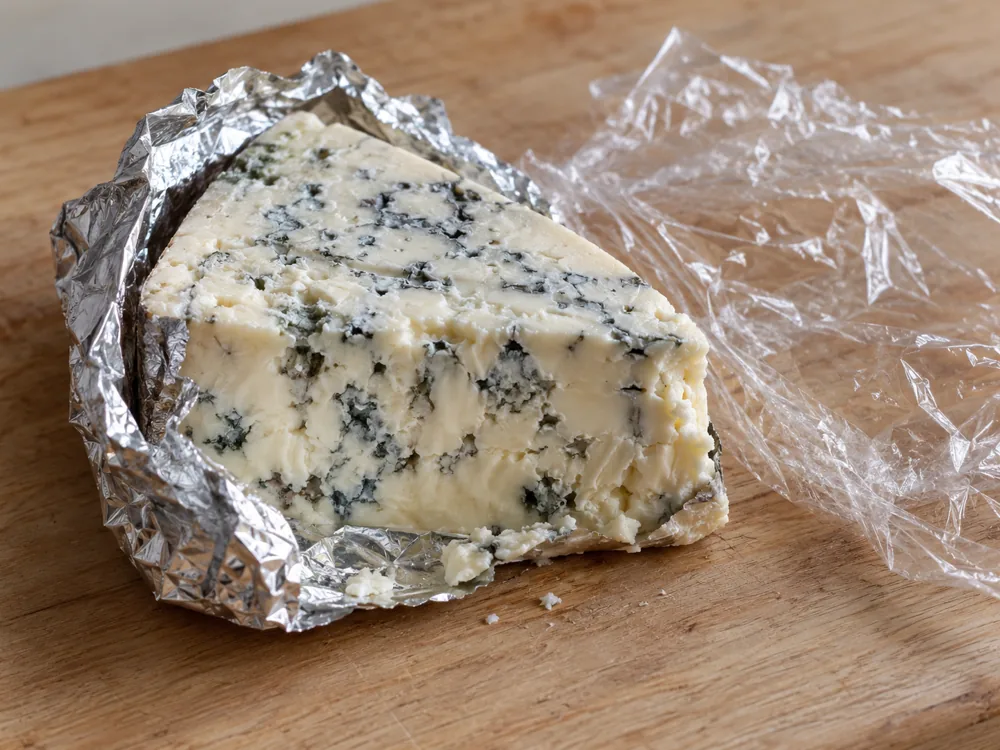
- Rind off, foil on: remove the rind and wrap the cheese in aluminium foil to limit odours.
- Cover the cut face: food-grade cling film prevents oxidation and a dull yellow film.
SOURCES & REFERENCES
What Else Do People Ask About Gorgonzola and Wine?
For a Moscato, choose the sweet Moscato passito liquoroso the consortium names, or one of the late-harvest Muscats Fiona Beckett suggests.
Yes. Cheese.com lists Sauternes for Gorgonzola, and it fits Beckett's rule of sweet wine with blue cheese.
Beckett accepts dry red wine when Gorgonzola is cooked into a baked pasta dish, even though she is not convinced by dry red with the cheese served on its own.
Recioto is the bottle we would try first for a board with both styles, as our own inference: the consortium names it among aged reds for Piccante, and Fiona Beckett suggests Recioto della Valpolicella for a Gorgonzola and fig course.