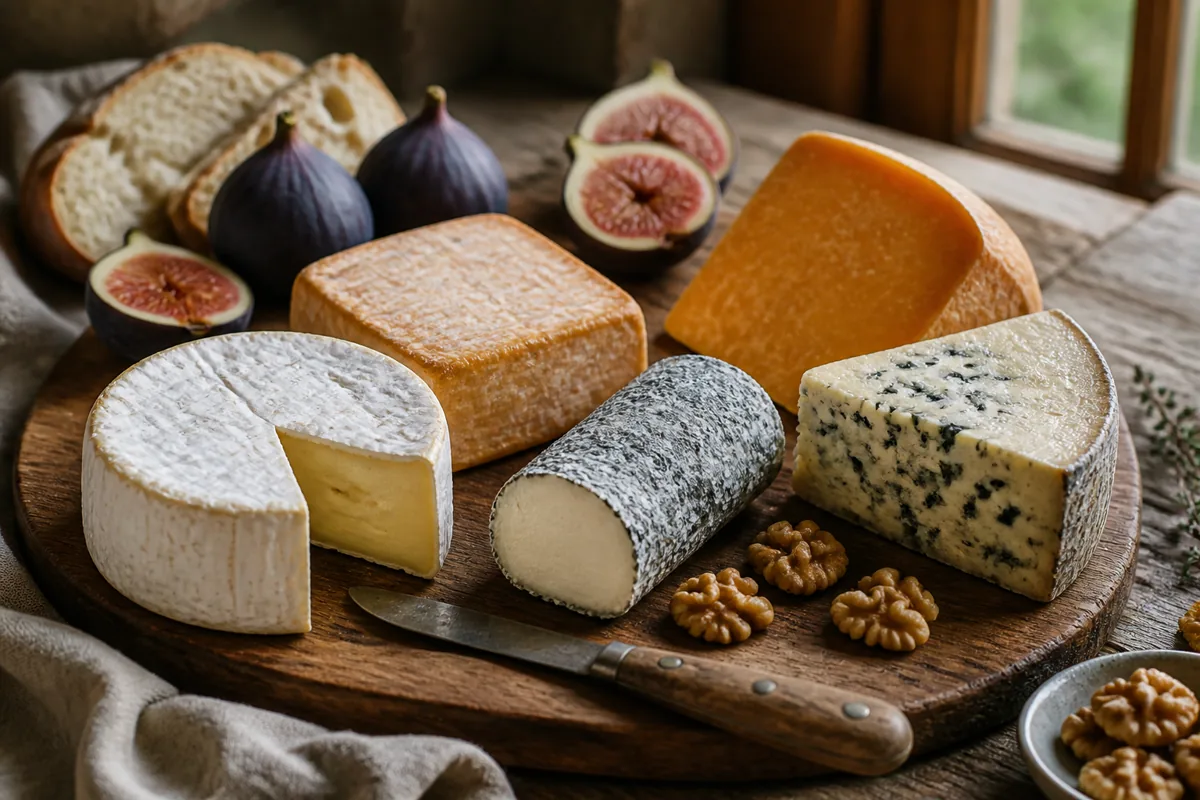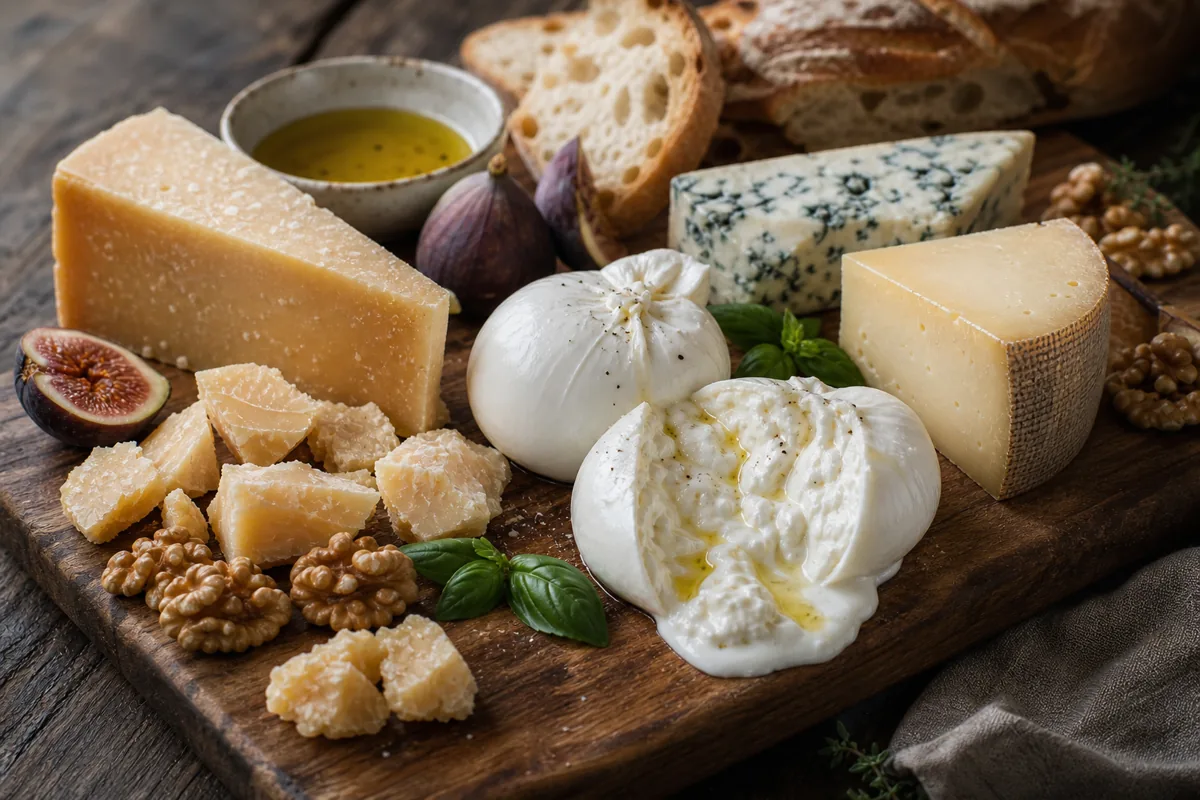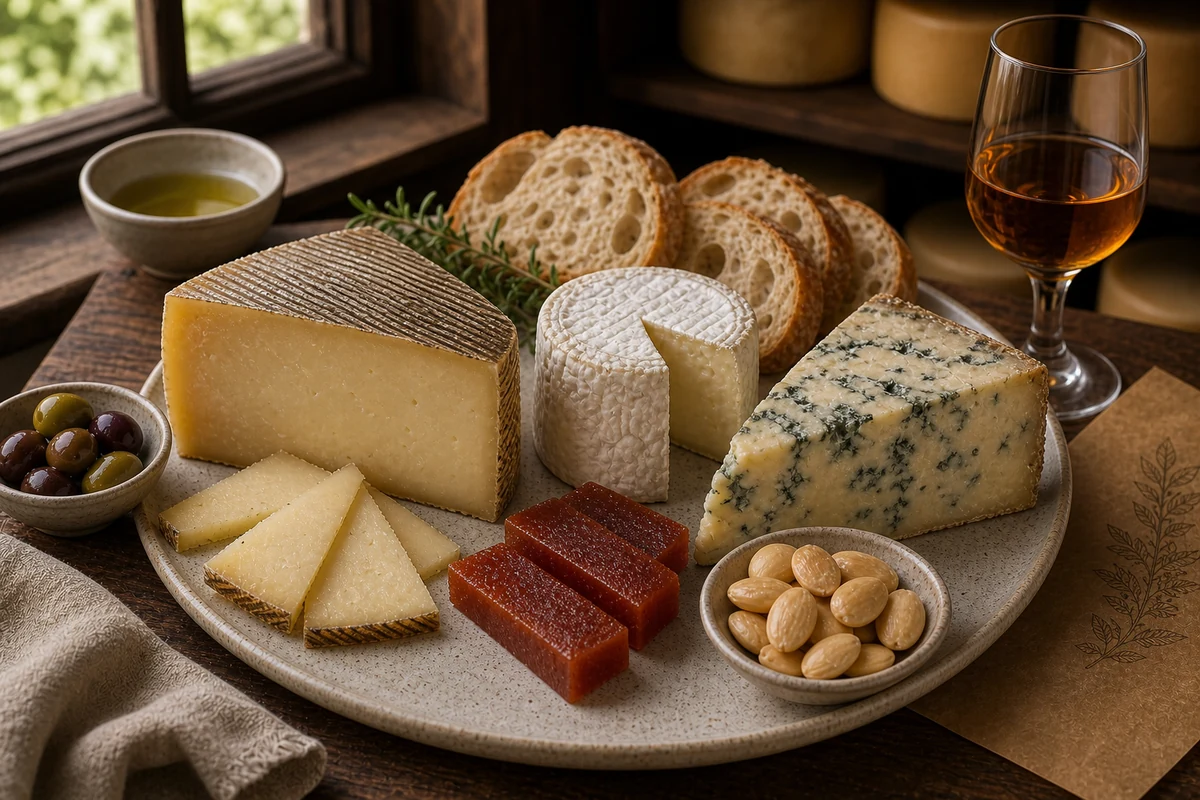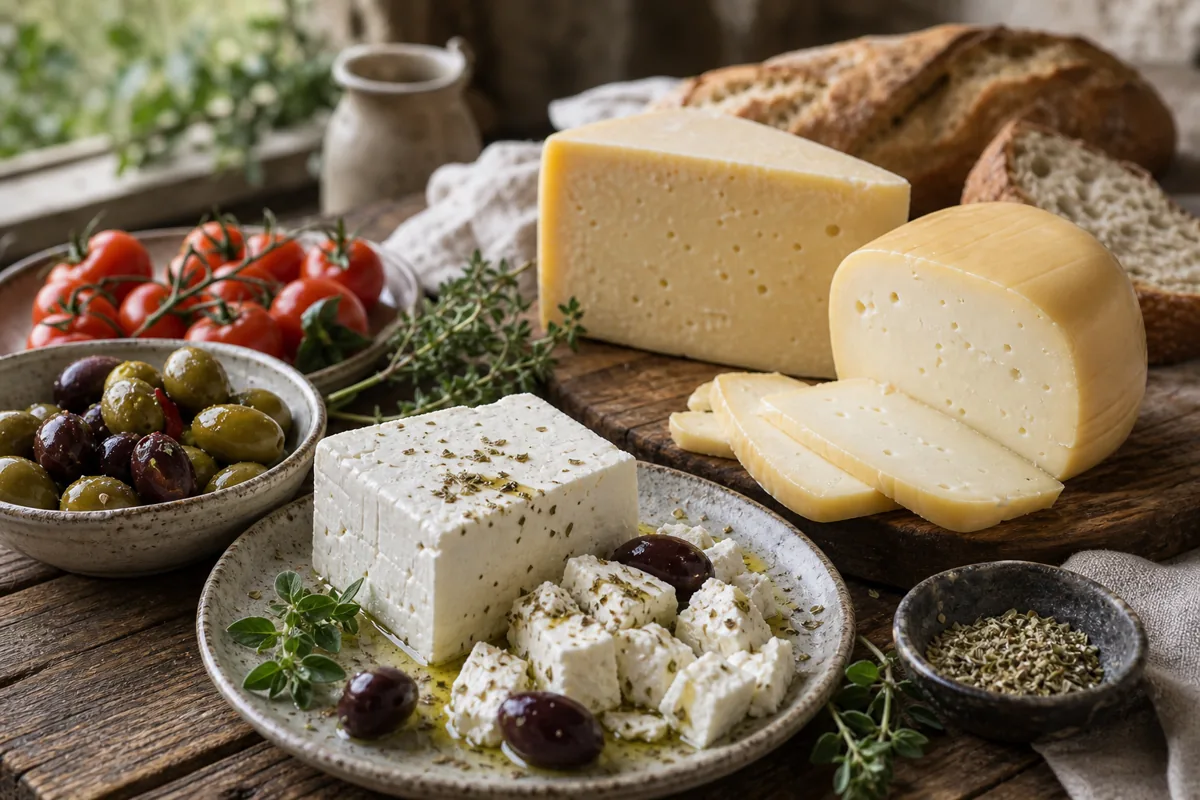
Each of those cheeses stands for a family on the Greek shelf: brined cheeses such as feta for salads and mezze, hard sheep's-milk cheeses for grating or slicing, pasta-filata styles for an elastic melt, and fresh whey cheeses for mild spreads or desserts.
That structure matters because Greek cheeses can look similar in a cold case. Two pale blocks may behave completely differently once one is brined, one is aged, and one is built to handle heat.
In This Article
Why Do Brine, Sheep Milk, and Heat Matter for Greek Cheese?
Greece's cheese identity starts with sheep and goats. Their milk brings more fat, more tang, and more density than the cow's-milk baseline many shoppers expect.
Brine is the second clue. It preserves, seasons, and firms cheeses such as feta, so the cheese arrives with its own salt structure before you ever add dressing, olives, or bread.
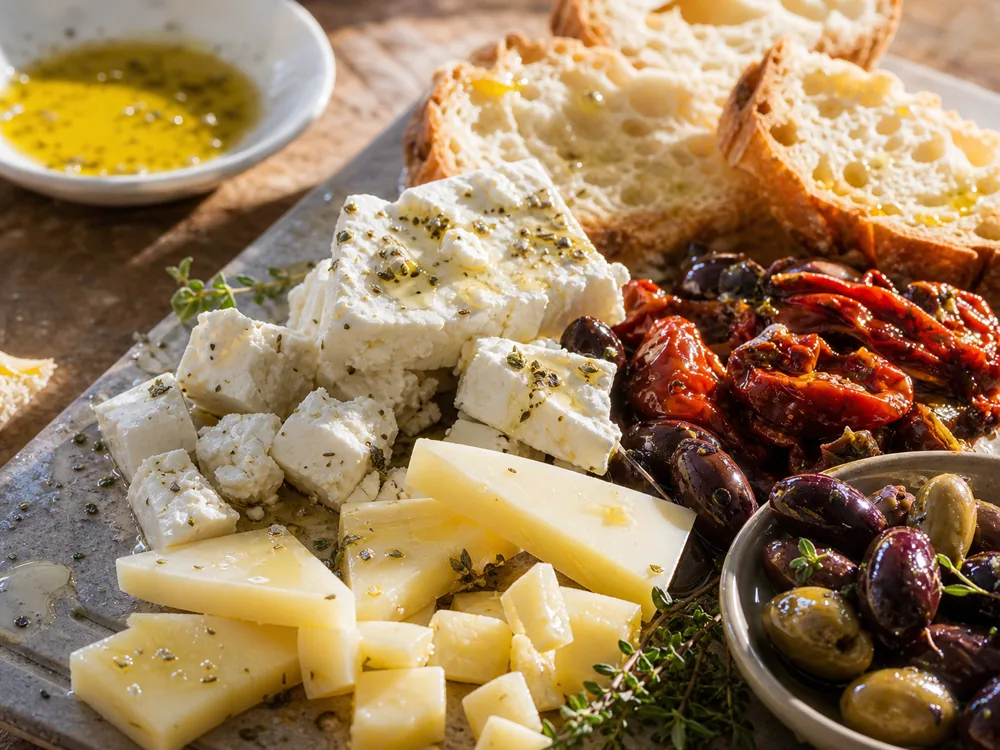
Heat is the third clue. Some Greek cheeses are made for cold crumble, some for grating, and some for frying or baking without disappearing into the pan.
Sheep's milk changes what a cheese does in a pan as well as how it tastes. The extra fat means a sheep's-milk block browns sooner than a cow's-milk one of the same firmness, so the heat comes down earlier than a cheddar recipe would tell you.
Once you use those three clues, the shelf stops being a feta guessing game. It becomes a set of practical choices for salad, mezze, pastry, pasta, grilling, and dessert.
Why Is PDO Feta the Starting Point for Greek Cheese?
Feta deserves its fame because it does so many jobs at once. It salts a tomato salad, holds its shape on a mezze plate, softens in baked dishes, and adds tang without needing a sauce.
PDO feta must use at least 70% sheep's milk, with up to 30% goat's milk from approved Greek regions. It also ages in brine for at least two months, which is why real feta tastes creamy, salty, and tangy rather than only sharp.
The copycat problem is real. A generic brined white block may be made with cow's milk and can taste flatter, saltier, and less creamy than PDO feta.
Buy feta as a block in brine when you can. Pre-crumbled feta dries out faster and loses the creamy center that makes good feta useful.
Feta keeps in its brine and dries out fast without it. If the block you bought came with too little liquid to cover it, mix a teaspoon of salt into a cup of water and keep the cheese submerged in a lidded box.
- Best feta clue: a brined block with PDO language, not dry crumbles.
- Best flavor clue: sheep's milk brings richness, while goat's milk sharpens the tang.
- Best use clue: choose feta when the dish needs crumble, salt, and acidity together.
Which Cheeses Come From Crete and the Greek Islands?
Crete gives Greek cheese a firmer, nuttier side. Cretan graviera is the easiest example for many shoppers because it can act as a table cheese, a grating cheese, or a frying cheese depending on age and cut.
That role is not the same as Swiss Gruyere, even though the names can confuse people. Greek graviera usually sits in a sheep- or mixed-milk tradition and belongs with Greek table service, not fondue shopping.
Whey cheeses from Crete and the islands add a softer choice. Fresh mizithra, the Cretan whey cheese, can be mild and soft, while salted aged versions move closer to grating and finishing use.
- Graviera: buy for nutty slices, frying, or a firmer Greek board slot.
- Mizithra: use fresh styles for soft mild service and aged salted styles for finishing.
- Manouri: use when you want a creamier, gentler whey-cheese answer beside fruit or honey.
These are the Greek cheeses to buy when feta would make the whole table too salty. Harder island and mountain cheeses add chew, toastiness, and quieter depth.
Should You Crumble, Grate, Fry, or Soften Greek Cheese?
Greek cheese gets much easier once you ask what happens under pressure. Some cheeses crumble cleanly, some grate into hot food, some brown without collapsing, and some soften into a fresh creamy layer.
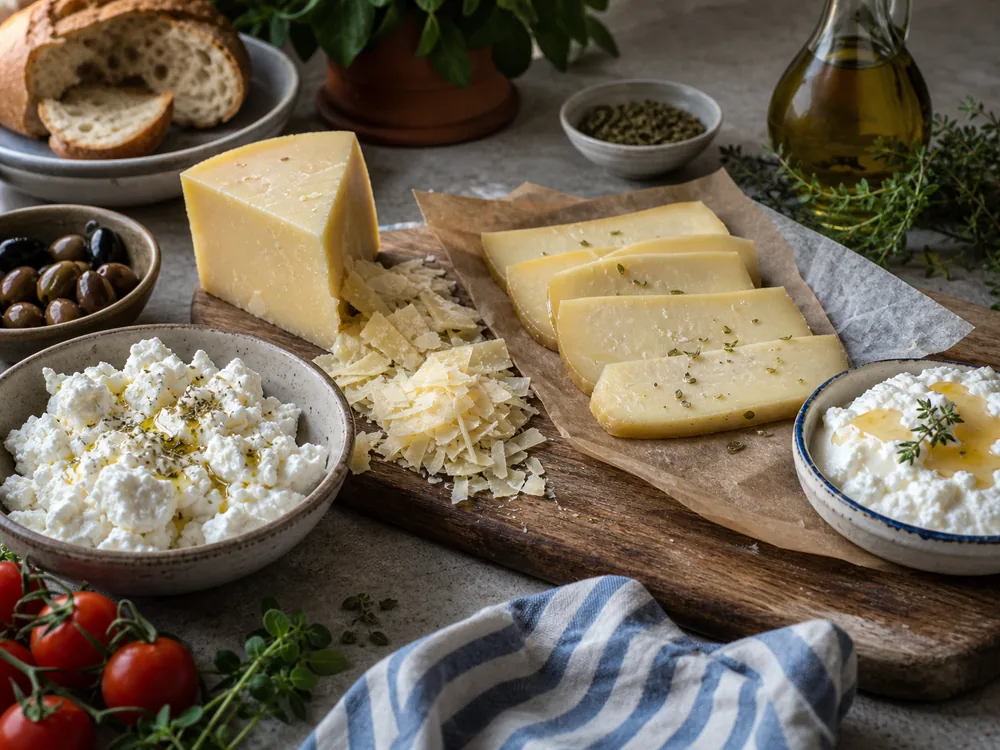
Kefalotyri, Greece's hardest grating cheese, brings salt and sharpness to pasta, pies, and baked dishes. Kasseri, a pasta-filata cheese, melts with more elasticity for sandwiches, pastries, and warm dishes where a hard grater would feel too dry.
Kefalograviera, a PDO hard wheel, sits between those two. It can grate, slice, or fry, which makes it useful when you want one Greek cheese that can cover several meal jobs.
- For frying: use firmer cheeses that hold their shape; grillable Halloumi is the clearest heat-survival reference.
- For grating: use kefalotyri or aged mizithra when salt and dry texture are the point.
- For soft service: keep manouri and fresh whey cheeses away from high heat.
Do not treat every Greek hard cheese like Parmesan. Some are saltier, some fry better, and some are meant to stay as table slices rather than disappear into sauce.
Frying one of these cheeses is a two-minute job or a ruined one. Heat the pan before the cheese goes near it, leave each piece alone until the underside has colored, and turn it once.
Grated hard cheese belongs on a bake at the end rather than the start. Salt concentrates as the top dries out, so a layer added early comes out sharper than the same weight stirred through the dish.
This texture-first approach prevents the common mistake: using feta everywhere because it is familiar. Feta crumbles and seasons.
It does not replace every Greek cheese that can brown, stretch, or grate.
How Do You Build a Greek Cheese Plate Around Salt?
A Greek cheese plate can become too salty fast. Feta, olives, cured fish, brined vegetables, and hard sheep's-milk cheese all pull in the same direction if you do not give them a counterweight.
The fix is simple: pair salt with juicy, starchy, bitter, or sweet support. Tomato, cucumber, bread, honey, herbs, and fruit keep the plate from becoming one sharp bite after another.
| Pairing | Why It Works |
|---|---|
| Feta | Tomato, cucumber, olives, and bread work because acid and water balance the brine. |
| Graviera | Honey or fruit fits the nutty sheep's-milk side without adding more salt. |
| Kasseri | Warm bread, roasted peppers, or pastry give the elastic melt somewhere to go. |
| Manouri | Honey and figs suit its soft whey richness better than heavy salty sides. |
This is also where manouri, the creamy PDO whey cheese, earns its place. It can calm the plate after feta and hard cheese instead of competing with them.
- Add water: tomato, cucumber, or melon keeps brined cheese from dominating.
- Add starch: bread or pita turns salty cheese into a meal instead of a salt hit.
- Add sweet: honey or figs fit graviera and manouri better than another salty side.
What Are the Main Greek Cheese Names?
The list below links Greek cheeses that have their own profile here, from anthotyro to kefalotyri and organic feta. Type a name, or pick a style, to narrow it.
7 cheese profiles
How Do You Buy Greek Cheese Outside Greece?
Outside Greece, feta is easy to find and everything else is more uneven. That makes label reading more important.
For feta, look for PDO, sheep's milk, goat's milk allowance, and brine. For graviera, kasseri, kefalotyri, and manouri, look for Greek origin, milk type, and a use that matches your plan.
For storage, brined cheese and dry aged cheese need different care. A block of feta should stay in brine, while firmer wedges need wrapping that limits drying without trapping too much moisture.
Ask when a hard Greek wedge was cut, since these cheeses are usually sold from wheels that have been open at the counter for a while. A cut face that has dried to a pale crust tastes sharper than the wheel does and grates to dust rather than shreds.
If you bring home several styles, texture-based cheese storage matters.
The final buying rule is practical: feta starts the Greek shelf, but texture finishes the decision.
SOURCES & REFERENCES
What Else Do People Ask About Greek Cheese?
These questions come up most when readers know feta but want to understand the rest of the Greek shelf.
Feta is the most famous Greek cheese. PDO feta uses mostly sheep's milk, may include goat's milk, and ages in brine.
No. Many white brined cheeses look similar, but PDO feta has specific milk, region, and brine-aging rules.
Graviera, kefalograviera, and some firmer Greek cheeses work better for frying than feta because they hold structure under heat.
Kasseri is useful when you want a Greek cheese with more elastic melt, especially for warm bread, pastries, sandwiches, and baked dishes.
Try graviera for nutty hard slices, kasseri for melt, kefalotyri for sharp grating, and manouri for a softer fresh whey cheese.