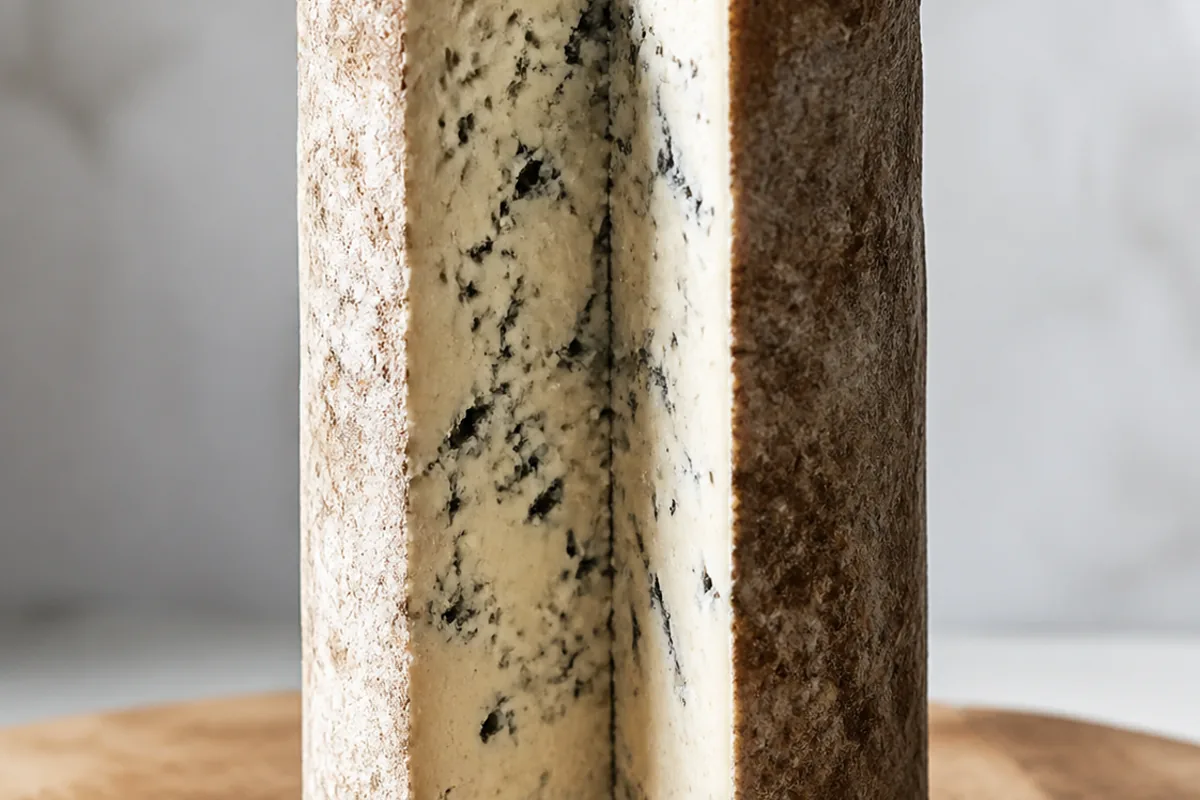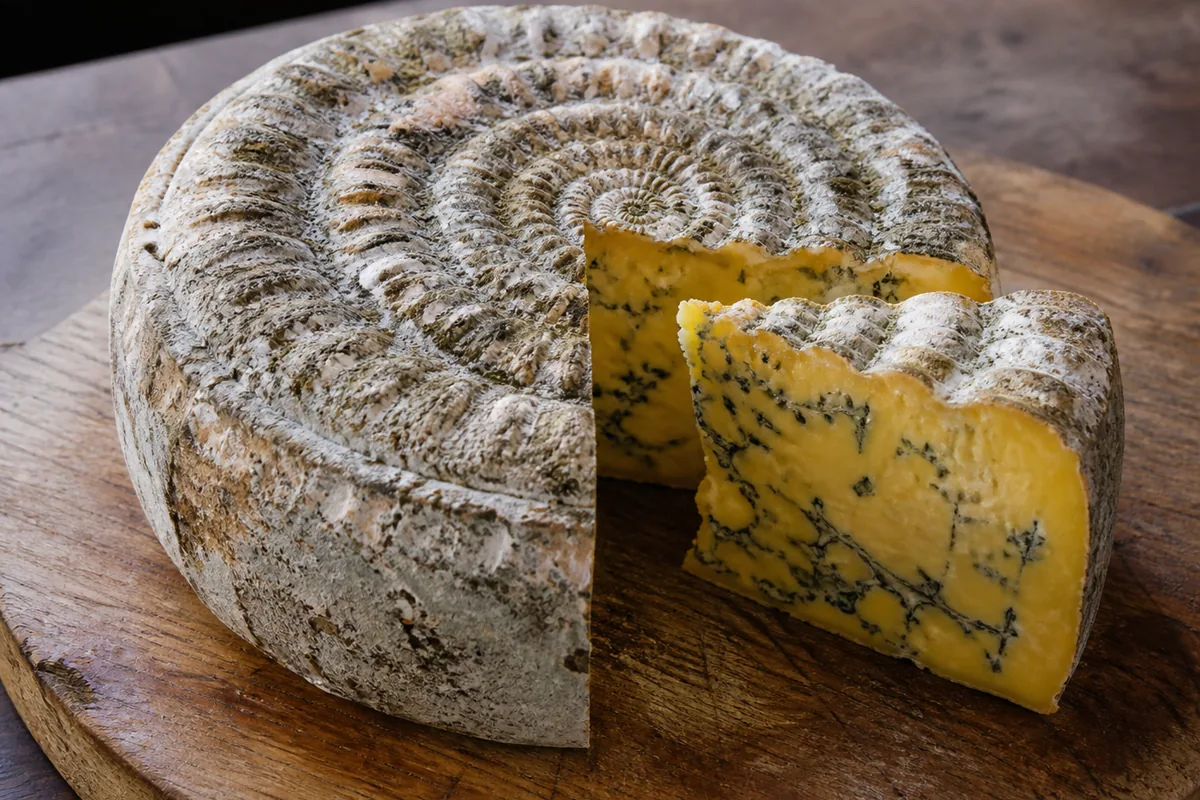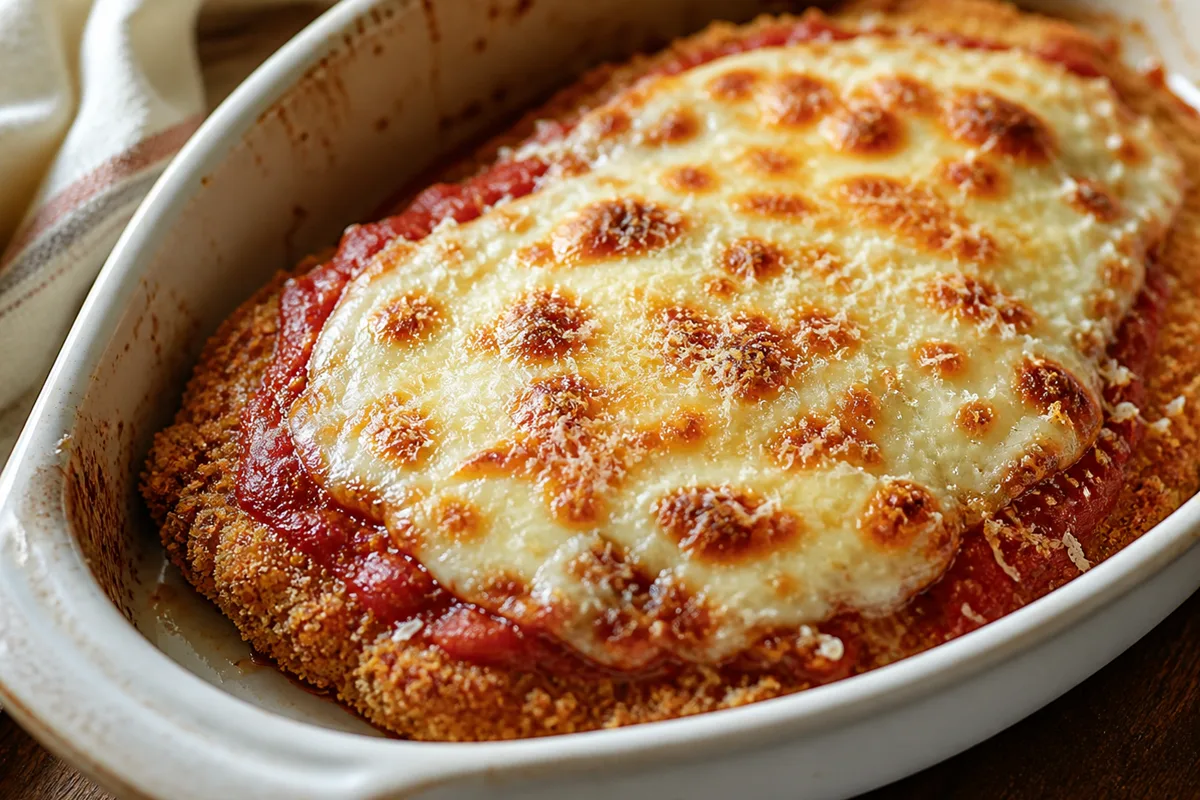
Almost every bad chicken parmesan fails in one of two ways, and both are cheese problems.
Either the crumb has gone soft under a layer of released water, or the cheese has tightened into a rubbery sheet that pulls off the cutlet in one piece.
The chicken is the easy part. What you choose to put on top of it, and how much sauce you put underneath, decides whether the dish works.
In This Article
The Cheese Is the Part That Fails
A cutlet is crumbed and fried so it has a crisp surface, and then most recipes bury that surface in wet ingredients.
Everything after the frying stage is a race between the oven browning the cheese and the moisture in the dish softening the crumb underneath it.
That window is narrower than most recipes let on. Low-moisture mozzarella finishes melting in around three minutes at 450 F, while the crumb begins taking on water the moment sauce touches it.
Win that race and you get a crisp base, a browned top, and cheese that stretches. Lose it and you get a soggy cutlet no amount of good chicken can rescue.
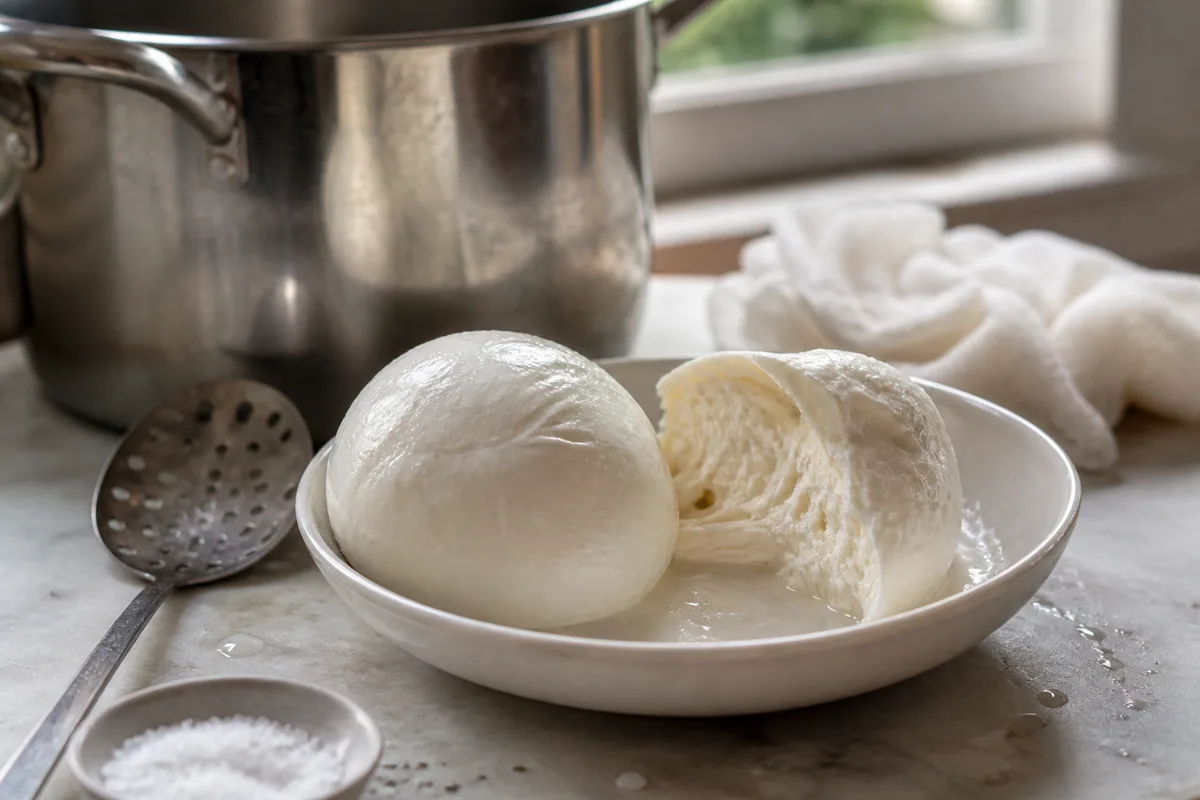
Why Low-Moisture Mozzarella Beats Fresh Here
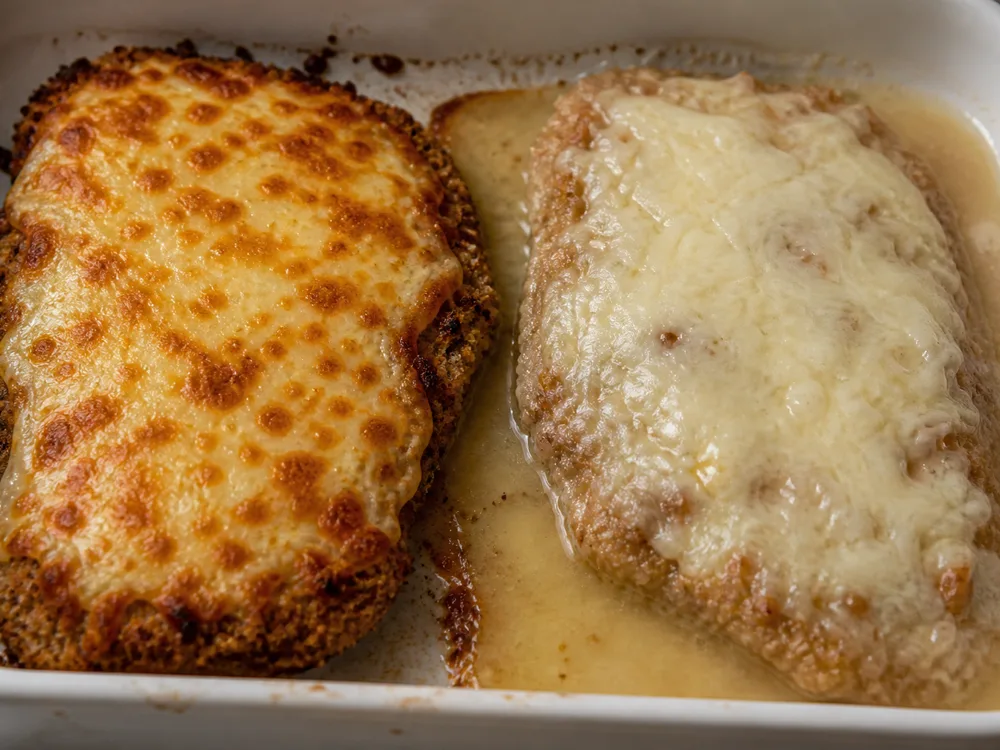
The two mozzarellas are not interchangeable in this dish, and the gap between them is measurable rather than a matter of preference. Water is the whole argument, and how much of it the cheese carries decides whether the crust underneath survives the oven.
| Fresh mozzarella | Low-moisture mozzarella | |
|---|---|---|
| Moisture | Around 65 percent | Around 45 to 52 percent |
| In a slow oven | Weeps water that pools in the dish | Melts without flooding |
| Browning | Pale, little Maillard colour | Blisters and browns readily |
| Best bake | Fast and very hot, under five minutes | Anything longer, including this dish |
The mechanism matters because it tells you when the rule flips. A home oven heats slowly, so the protein structure in fresh mozzarella breaks down gradually and its water leaves all at once, pooling in the middle of the dish rather than evaporating.
Low-moisture mozzarella has already been aged, pressed, and dried, so there is far less water to lose.
It also carries enough fat to brown properly, which is where the blistered gold patches on a good chicken parmesan come from.
None of this makes fresh mozzarella a lesser cheese. It is the right choice for a ninety-second pizza or a raw plate, and the wrong one for a twenty-minute bake.
Grate it rather than slicing it. Grated cheese melts evenly across the cutlet, while thick slices leave thin patches at the edges and a dense cap in the middle.
What the Parmesan Is Actually For
The cheese in the name contributes almost none of the melt.
Parmesan is too dry and too aged to stretch, and a layer of it alone would go grainy rather than molten.
What it brings instead is salt, savoury depth, and browning.
Put it where those qualities work. Mixed into the breadcrumbs it seasons the crust from the inside, and scattered over the mozzarella it browns faster than the mozzarella does and gives the top its darker flecks.
Keep it out of the melt layer itself. Sandwiched under the mozzarella it simply sits there, adding salt without contributing texture, and the same quantity does more work in the crumb.
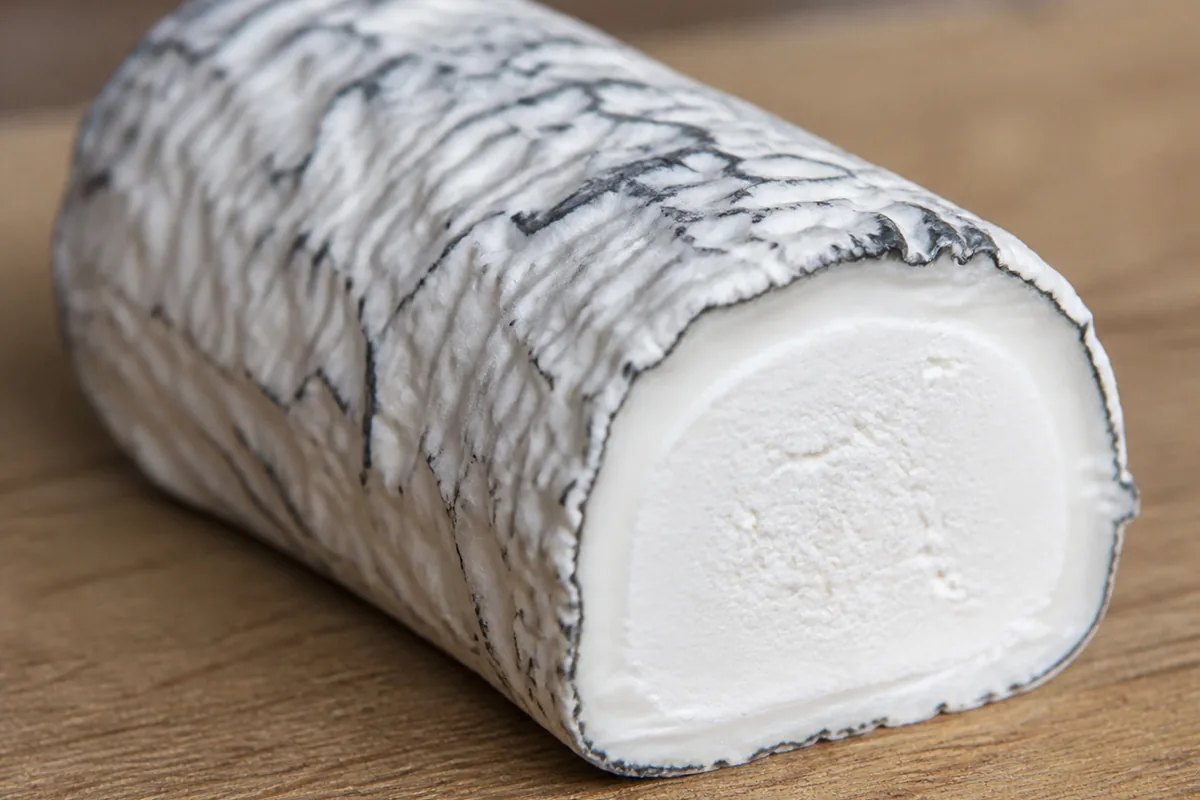
Pecorino Romano is the useful swap when you want more force. It is sharper and saltier than Parmesan, so cut the added salt elsewhere if you use it.
Should You Add Provolone?
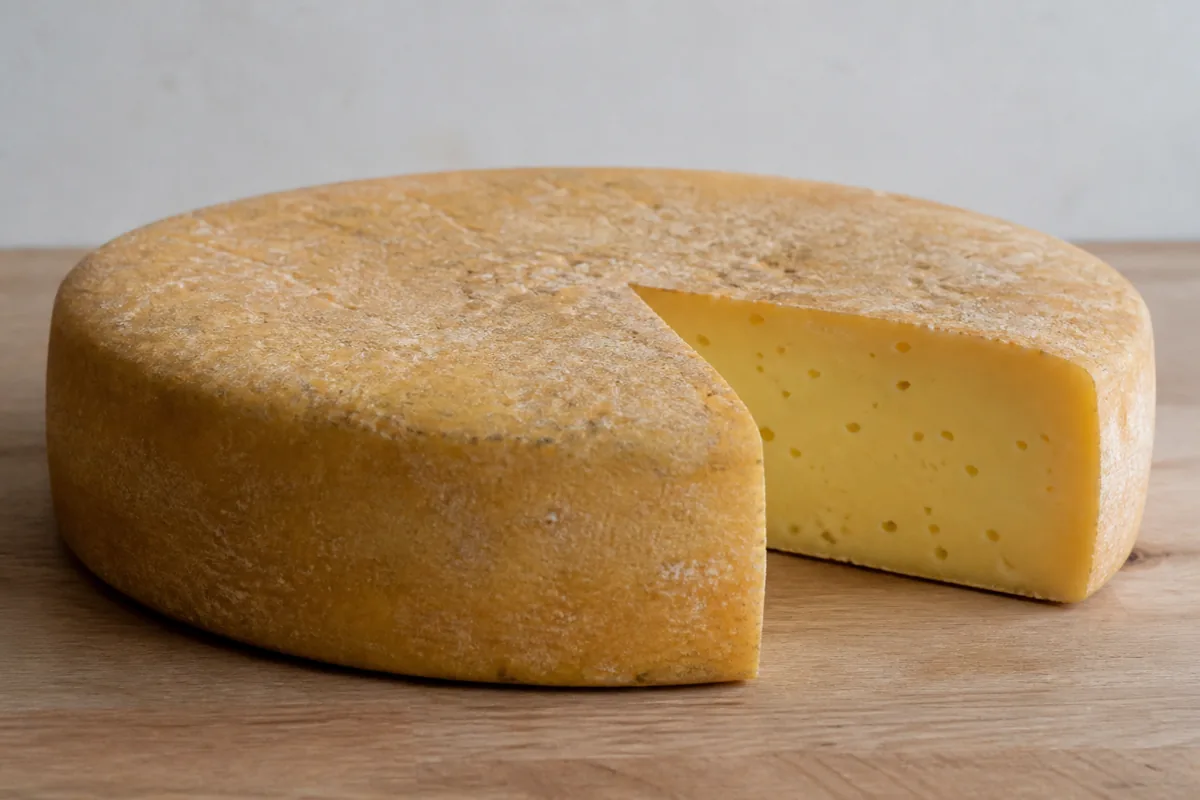
A little provolone gives the melt layer a savoury depth that young mozzarella does not have on its own.
Keep it to about a quarter of the cheese by weight. More than that and it starts to dominate, and provolone browns less generously than low-moisture mozzarella.
Skip it entirely when the sauce is already assertive with garlic or chilli, because the two compete rather than layer.
How Much Cheese Goes on One Cutlet
Most home versions use far too much cheese, and the excess is what turns into a pool in the bottom of the dish. A pounded cutlet is half an inch thick, so a heaped mound puts more cheese on the plate than the surface holding it can carry.
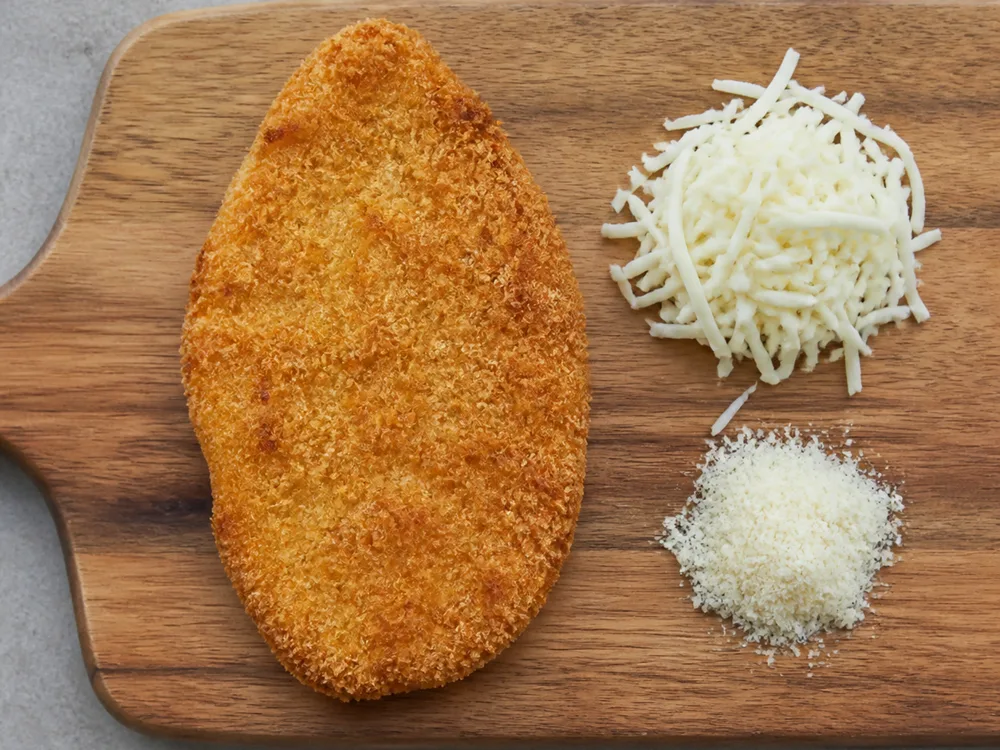
Around 60 to 80 grams of grated low-moisture mozzarella covers a single pounded cutlet properly, with roughly a further 15 grams of Parmesan scattered over the top.
That sounds modest against a restaurant plate, and it is. A thick blanket cannot brown through to the bottom layer, so the cheese nearest the sauce stays pale and slack while the surface colours.
Spread it to the edges rather than piling it in the centre.
Cheese at the rim browns first and forms a seal, and that seal keeps the crumb underneath drier than a heaped middle ever will.
The same logic sets the sauce quantity. Two tablespoons on top of the cutlet is enough to register, and anything approaching a ladle is fighting the crust.
The Recipe
The quantities follow the cheese proportions argued above, and the timings assume the cutlets finish cooking in the pan rather than the oven.
Chicken Parmesan
Ingredients
- 2 lb boneless skinless chicken breast, halved horizontally into 4 cutlets
- ¾ cup plain flour
- 2 large eggs, beaten with 1 tablespoon olive oil
- 1¼ cups panko breadcrumbs
- 60 g Parmesan, grated, half for the crumb and half for the top
- 240 to 320 g low-moisture mozzarella, grated, which is 60 to 80 g a cutlet
- Up to 80 g provolone, grated and optional, replacing a quarter of the mozzarella
- ½ cup thick reduced tomato sauce, which is 2 tablespoon a cutlet
- 1 cup vegetable oil, enough for ½ inch in the pan
Method
- Heat the oven to 450 F before anything else, because the bake at the end is measured in minutes rather than tens of minutes.
- Pound the cutlets to an even ½ inch, since a thin end overcooks while you wait for the thick end.
- Set up three trays: flour, then the beaten egg and oil, then the panko mixed with half the Parmesan.
- Coat in that order and press the crumb on firmly, then rest the coated cutlets about 5 minutes so the coating clings instead of shedding into the pan.
- Heat ½ inch of oil to 350 F, because cooler oil is absorbed by the crumb rather than sealing it.
- Fry 2 to 3 minutes a side, until the crust is genuinely golden and the centre reads about 160 F, as it will not crisp further in the oven.
- Drain on a rack rather than paper, so steam escapes from underneath instead of softening the base.
- Spoon 2 tablespoons of sauce on top of each cutlet, never underneath it.
- Add 60 to 80 g of grated mozzarella spread to the edges, then scatter the remaining Parmesan over the top.
- Bake 3 to 5 minutes, until the cheese has browned in patches and the centre reads 165 F, the USDA safe minimum for poultry.
Sauce goes on top of the cutlet, not under it. Sitting a fried crumb in a pool of sauce is the single most common way this dish turns soggy, and moving the sauce above the crumb costs nothing in flavour.
Use a thick, reduced sauce rather than a loose one. A watery sauce contributes moisture to the same battle the cheese is already fighting.
Grate the mozzarella from a block rather than buying it shredded, for reasons the failure section returns to.
Fry two cutlets at a time rather than four. Crowding the pan drops the oil far enough that the crumb takes oil on instead of sealing, and that shows as a greasy crust long before the dish reaches the oven.
Take it out as soon as the cheese browns. Leaving it in to be safe overshoots the melt and starts tightening the proteins, which is where the rubbery sheet comes from.
The short bake is only possible because the chicken is already cooked through in the pan. A cutlet that goes into the oven raw needs twenty minutes or more, and that is long enough for the crumb to lose.
The Crumb Does Half the Work
The coating is not neutral packaging. It is the layer that has to stay crisp under everything else.
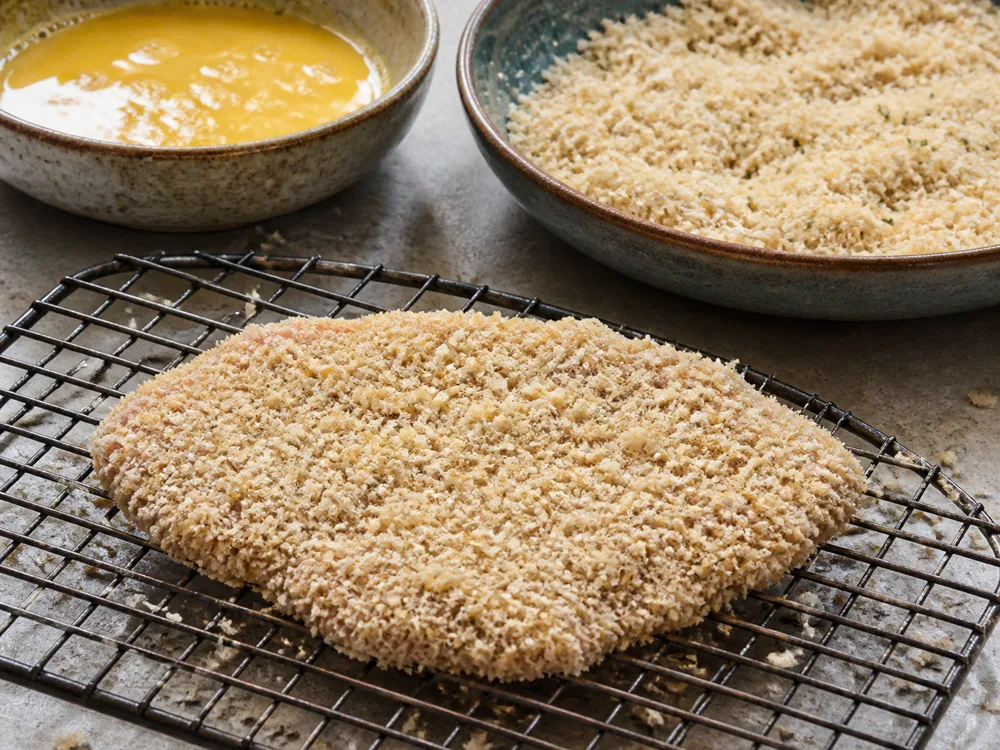
Dry breadcrumbs give a tighter, more even crust, while panko gives a lighter and more open one that holds crunch longer under sauce.
Either works, and panko has the edge for a dish that will sit under cheese for twenty minutes.
Half the Parmesan belongs in that crumb rather than on the plate.
Mixed through the breadcrumbs it seasons the crust from the inside and browns during frying, which means the crust arrives at the oven already carrying flavour instead of depending on the sauce for it.
Press the crumb on firmly and rest the coated cutlets for a few minutes before frying. A coating that has settled clings through the fry, and a loose one sheds into the oil and leaves bare patches for sauce to soak into.
Rest them side by side rather than stacked. Stacking presses the crumb flat and traps steam between the cutlets, and a damp coating comes away in sheets the moment it hits hot oil.
If You Cannot Get Low-Moisture Mozzarella
Substitute for the behaviour rather than the name, because what the dish needs is a cheese that melts without flooding.
- Best swap: young provolone, which melts cleanly and browns, though it is more savoury than mozzarella
- Widely available: a mild white cheddar, which browns well but breaks more easily if overheated
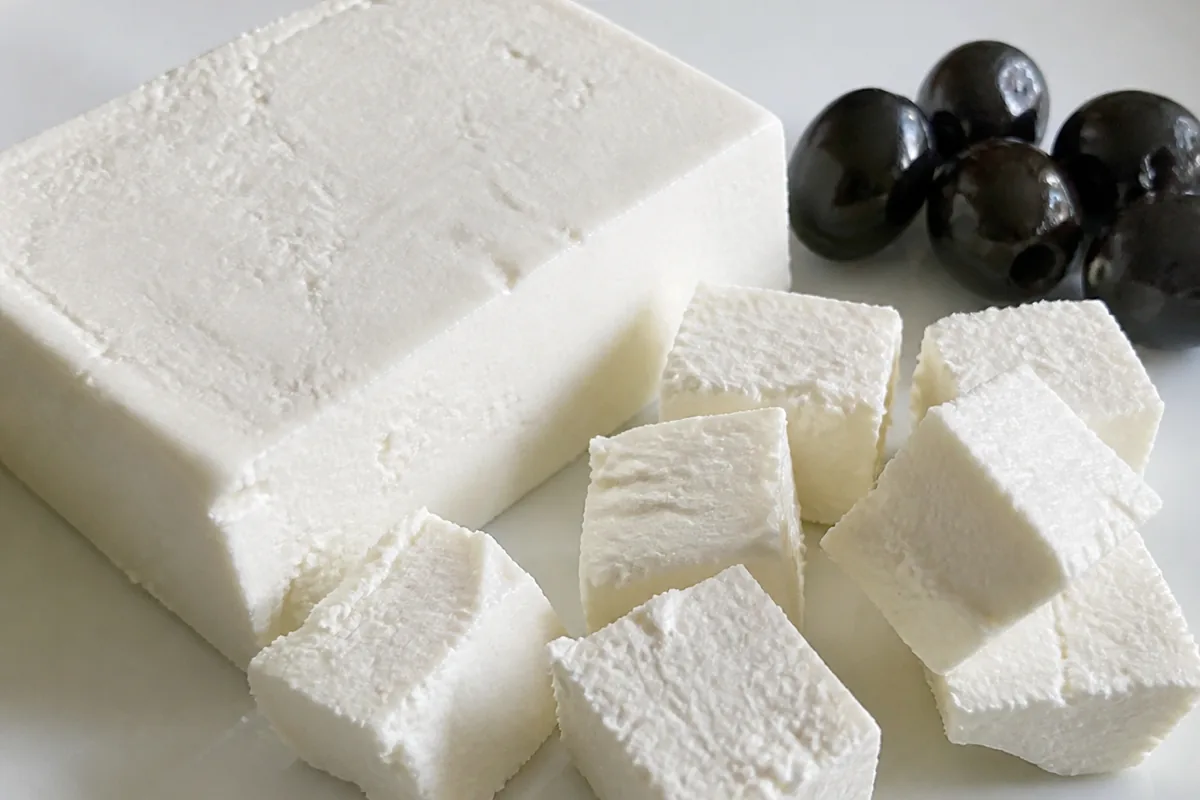
- If only fresh is available: slice it, salt it lightly, and drain it on paper for thirty minutes before use
- Wrong direction: any high-moisture fresh cheese used straight from its liquid, which guarantees the pool
Draining fresh mozzarella genuinely helps, and it does not fully solve the problem.
You can remove surface water but not the moisture held inside the curd, so a drained fresh ball still releases more than a low-moisture block and still browns less.
Squeezing it dry instead of draining it makes matters worse. Pressure tears the curd, and torn curd tightens into strings in the oven rather than settling into an even layer.
Our guide to mozzarella substitutes ranks the wider set by job, including the melting cases this dish depends on.
Where It Usually Goes Wrong
Four failures cover almost every disappointing chicken parmesan, and each has a specific cause.
- Soggy crumb: sauce underneath the cutlet, or fresh mozzarella releasing water into the dish
- Rubbery cheese: too long in the oven, past the point where the melt was finished
- Greasy pool: cheese overheated until the fat separated out, usually alongside overbaking
- Bland result: no Parmesan in the crumb, so the crust carries no seasoning of its own
Read the failures backwards and each one names its own cause. A pool of clear water is the mozzarella, a pool of oil is the bake, and a crust soft only on its underside is sauce or trapped steam rather than anything the cheese did.
The plate matters as much as the pan at that last stage. A cold plate pulls heat out of the base and condenses steam under the cutlet, so warm the plates while the dish is in the oven.
Pre-shredded cheese deserves its own warning. Bagged shreds are coated with starch or cellulose to stop them clumping, and that coating interferes with a smooth melt, so grating a block yourself makes a visible difference here.
If the crumb has already gone soft, the dish is not recoverable in the oven. The fix belongs to the next attempt, in the order of assembly rather than in extra cooking time.
Making It Ahead Without Losing the Crust
This dish reheats badly as a finished plate and very well as components, which is what decides how you split the work. Everything up to the frying can be done hours ahead, and everything after it belongs in the last ten minutes before you eat.
Fry the cutlets in advance and keep them uncovered on a rack in the fridge, where the surface stays dry rather than steaming under a lid.
Assemble and bake only when you are ready to eat. The cheese layer takes minutes, so nothing is saved by putting it on early, and everything is lost by letting sauce and cheese sit on a crumb for an hour before it goes in the oven.
Leftovers are best treated as a different dish. Reheat them in a hot oven on a rack rather than a microwave, and accept that the crumb will be firmer and less delicate than it was.
Freezing works at the fried-cutlet stage and not after saucing. A frozen assembled portion thaws into exactly the pooled-water problem the method was built to avoid.
Why It Is Called Parmesan, and the Eggplant It Came From
The name points at a cheese that is not the main one in the dish, and the reason is ancestry rather than proportion.
Chicken parmesan descends from melanzane alla parmigiana, the layered dish of fried eggplant with tomato, basil, and cheese that was already popular in Campania and Sicily by the eighteenth century.
Italian immigrants to the United States found meat cheaper and more available than it had been at home, and swapped the eggplant for chicken.
The dish is Italian-American rather than Italian. One of the earliest recorded recipes has been traced to Maryland in 1944, and by the 1950s it was a fixture on Italian-American restaurant menus, with no single inventor credited.
You will not find it on a traditional menu in Italy, where the eggplant version remains the dish that carries the name.
The cheese logic transfers to that original almost unchanged, and the case for low-moisture mozzarella is stronger there rather than weaker, because eggplant carries even more water than chicken does.
What changes is the structure. The eggplant version is layered and baked as one dish rather than plated as individual cutlets, so it tolerates a longer bake and a slightly wetter sauce.
What to Serve and Pour With It
Serve the pasta beside the cutlet rather than underneath it, on a plate wide enough to keep the two from touching. A bowl pushes them together, and the crumb is soft by the second forkful.
Sitting a crisp crumb on wet pasta undoes the work of the last twenty minutes before anyone picks up a fork.
| Pairing | Why It Works |
|---|---|
| Chianti or Sangiovese | Acidity cuts the fried crumb and matches the tomato. |
| Barbera | Bright and low in tannin, which suits melted cheese. |
| Dry lager | Carbonation resets the palate between rich bites. |
| Avoid heavy oaked reds | Tannin and oak fight both the tomato and the mozzarella. |
Acidity is the requirement rather than weight. The dish already carries fat from the frying and the cheese, and a drink with freshness does more for it than a big one.