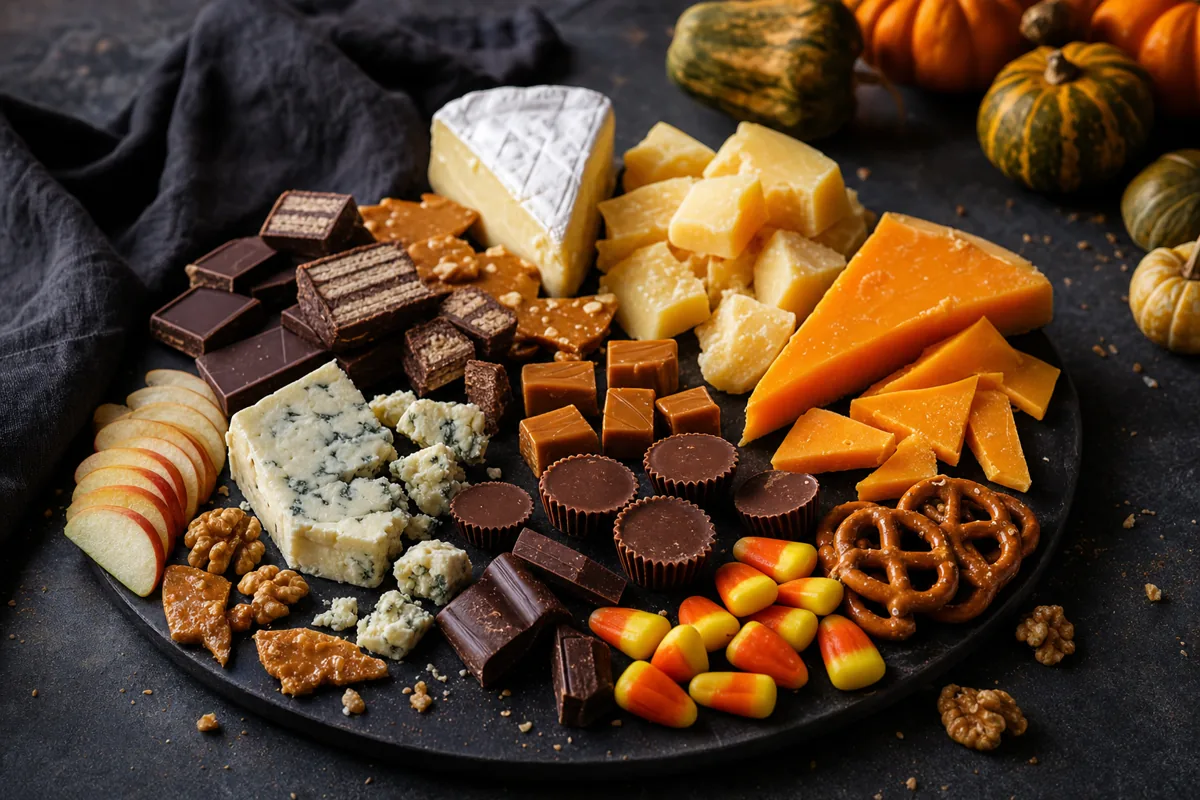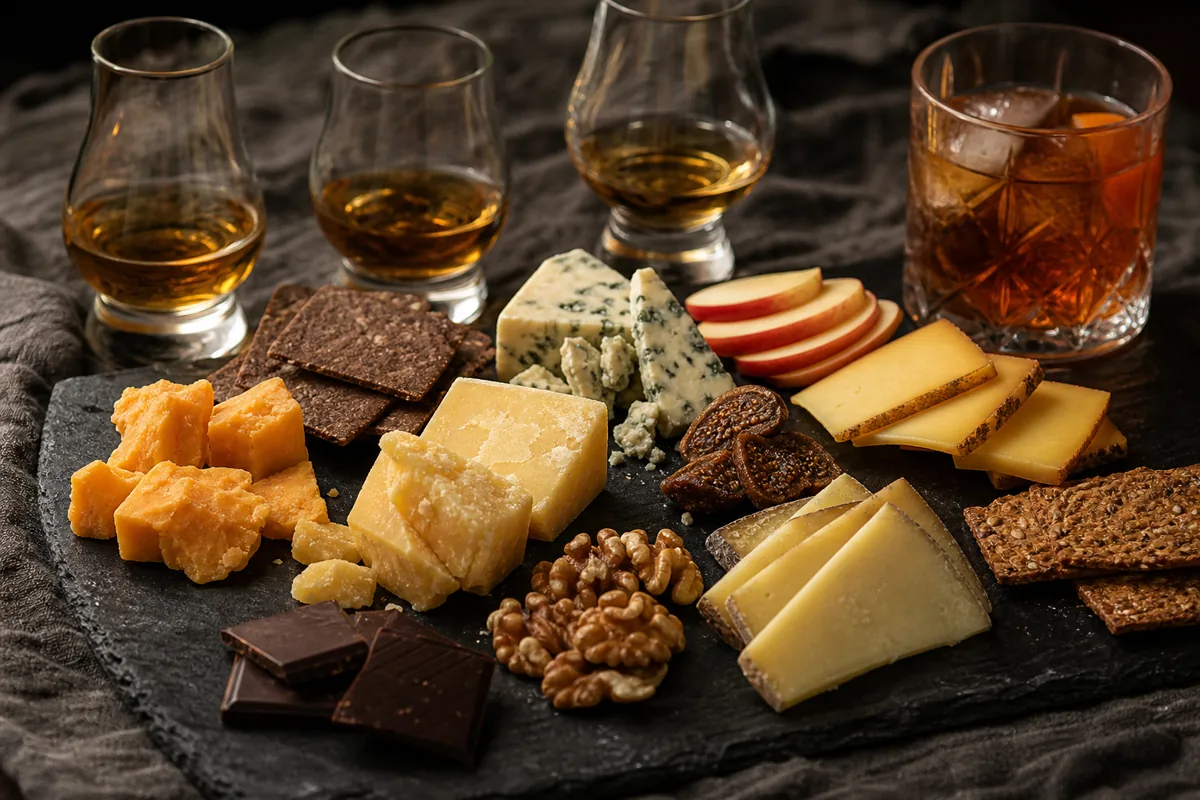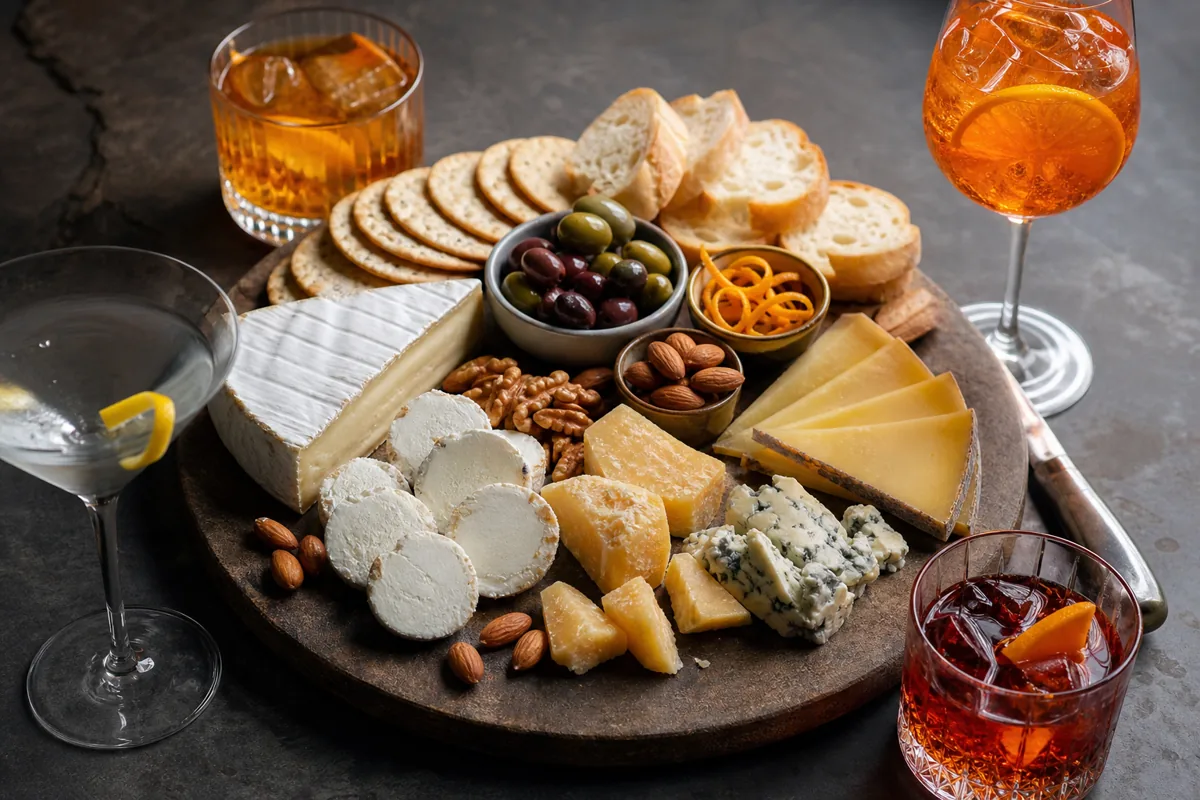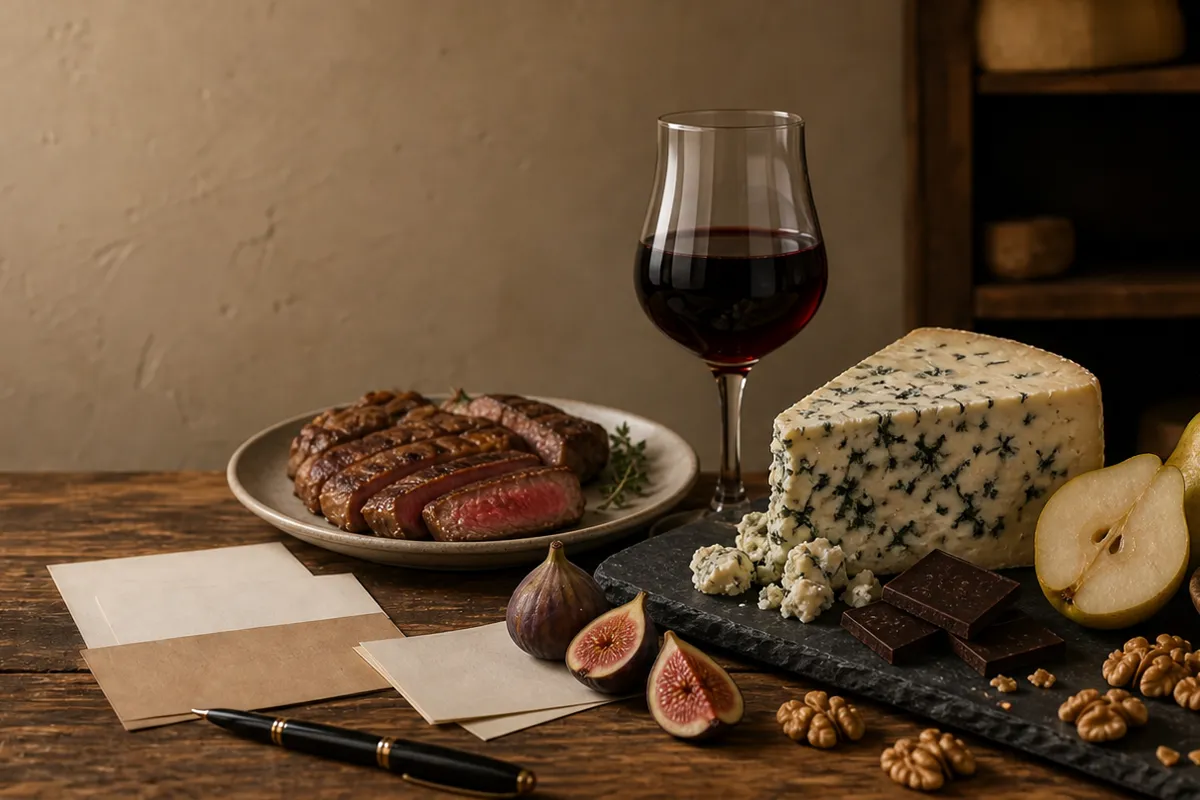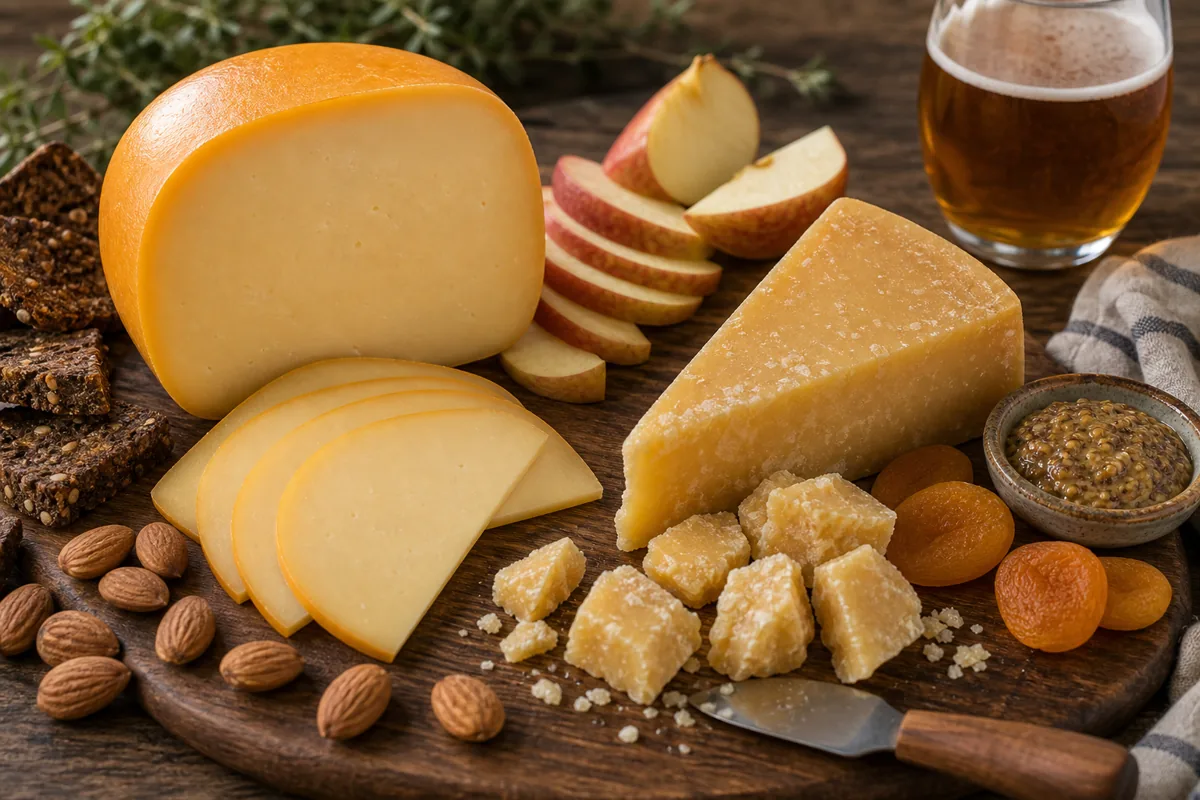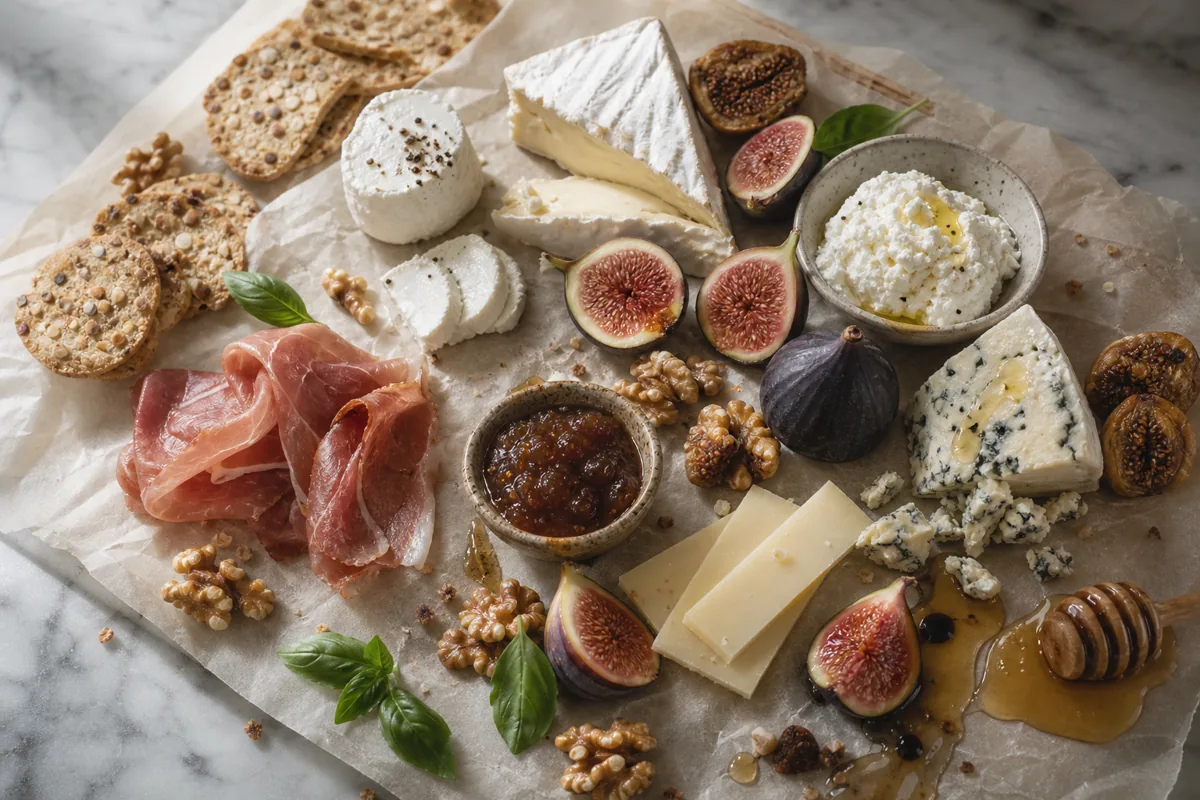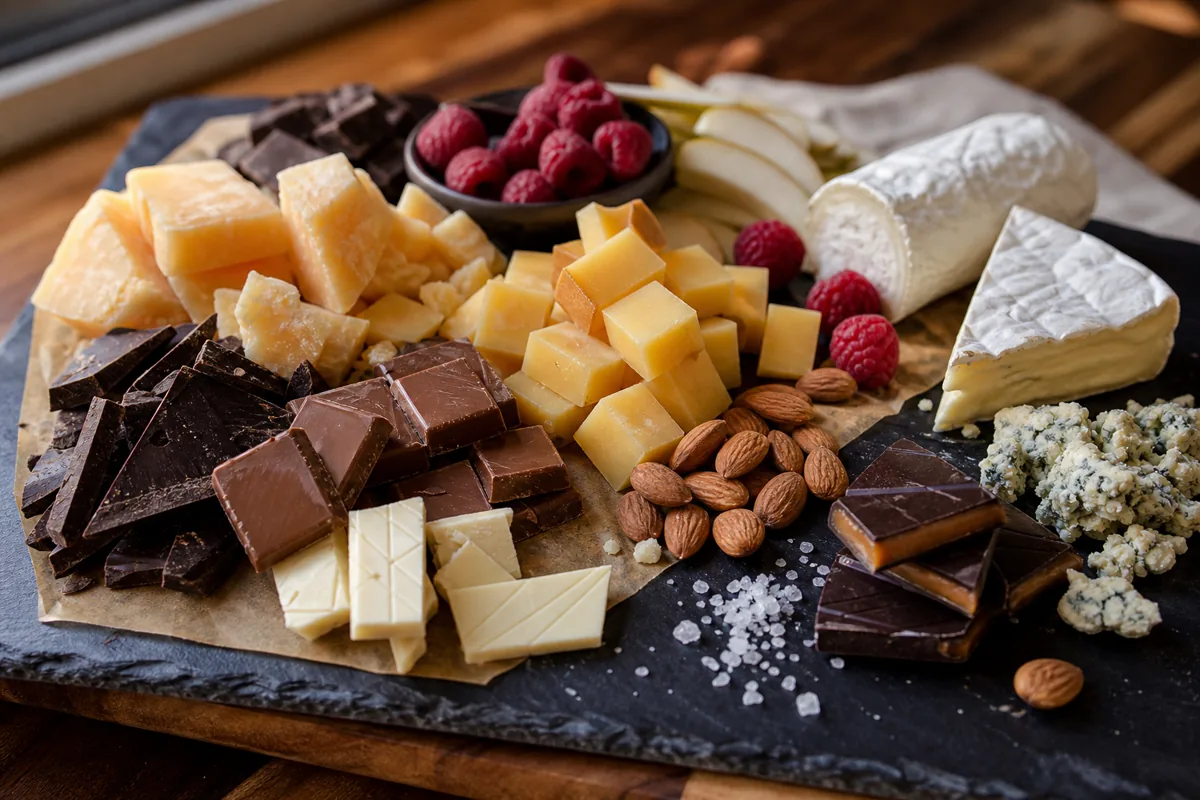
Jessica Sennett, founder of Cheese Grotto, gives the plainest rule of thumb in her pairing guide: pair a chocolate with a cheese that has a similar flavor profile, so a nutty chocolate goes with an aged, firm, nutty cheese.
Her other route is contrast, and experts use both, which is why one cheese can sit beside a different chocolate from one recommendation to the next.
In This Article
Why Does Chocolate Go with Cheese?
Sennett starts with fermentation: cacao seeds are fermented, dried and roasted before they become chocolate, and that fermentation produces lactic acid, which is also present in cheese.
Cheesetique describes both foods as fermented products from raw, natural sources, cacao beans and milk, that are varied, nuanced and complex. Butler, a cheesemaker and cheesemonger at France 44 Cheese Shop in Minneapolis, adds that they share textures and flavors that are creamy, nutty, salty, tangy and sometimes funky.
Matthew Rose of Fairfield and Greenwich Cheese Company puts the contrast side more simply: sweet and savory work together because each brings an element the other lacks. He also told Chowhound that cheeses are salty and tangy by nature and will work to some degree with almost anything sweet, so the effort goes into finding the combinations that go further.
Galer, a vice president at Dairy Management Inc., points to salt on both sides. In his burrata pairing with a salt-forward bar of 70% cocoa, the saltiness of the chocolate and the cheese highlights the bitter chocolate against the fresh milk and cream flavors of the burrata.
He ties the pairing to texture as well: a fresh cheese such as burrata gives a creamy consistency, while an aged cheese can add the crunch of salt crystals.
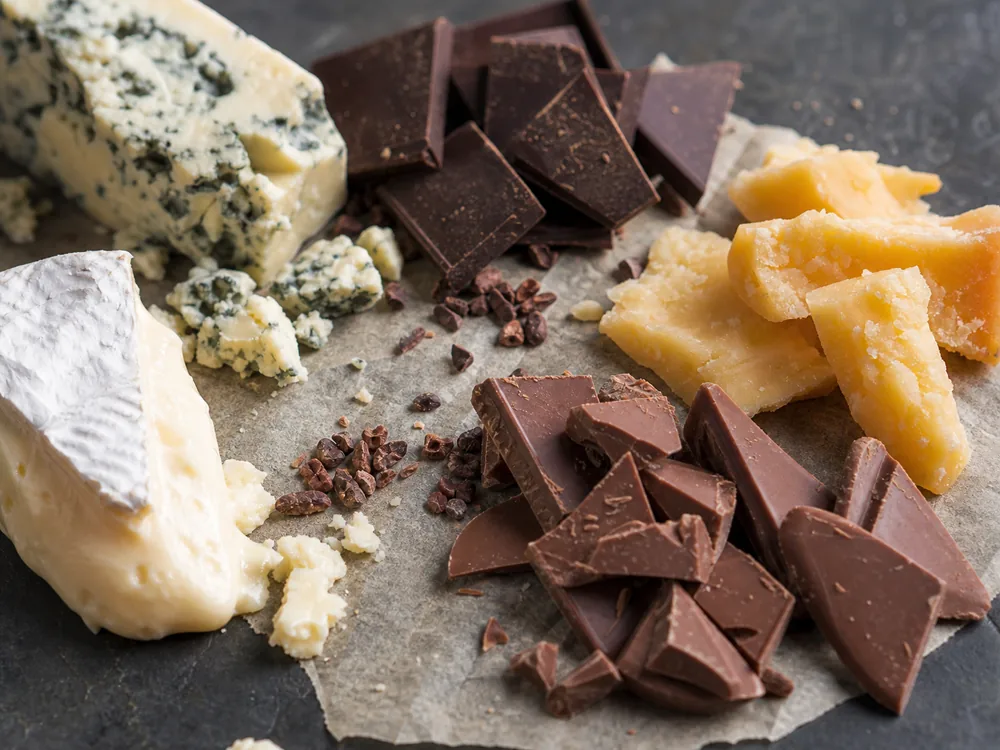
How Much Cacao Should the Chocolate Have?
Sennett is the one expert here who gives cacao ranges by cheese style, and her five ranges overlap, so a bar near 78% falls inside four of them and misses only the 80 to 90% range she gives for triple cream cheeses.
| Cheese Style | Cacao Range | Cheeses She Lists | Chocolate Notes She Names |
|---|---|---|---|
| Spreadable fresh and bloomy goat cheese | 70 to 80% | Fresh chèvre, Vermont Creamery Bijou or Coupole, Bucheron | Bright, herbaceous, tart |
| Young to medium-aged triple cream | 80 to 90%, or milk chocolate | Mt. Tam, Délice de Bourgogne, Brillat-Savarin, Nettle Meadow Kunik | A hint of minerality in dark chocolate; milk chocolate complements the creaminess |
| Medium-bodied washed rind | 60 to 80% | Langres, Taleggio, Bufaletto, Willoughby | Funky, earthy, herbaceous, spicy |
| Dense, nutty cheese | 75 to 85% | Comté, Gruyère, Pleasant Ridge Reserve, Beaufort, farmhouse cheddar such as Cabot Clothbound, medium-aged Gouda | Nutty and roasted |
| Blue cheese | 75 to 90% | Stilton, St. Agur, Fourme d'Ambert, Rogue River Blue, Bayley Hazen Blue | Minerality and flint, tart, nutty |
The other experts name percentages one pairing at a time, and the bars Butler picks run from 45% malted milk chocolate to 70% dark chocolate.
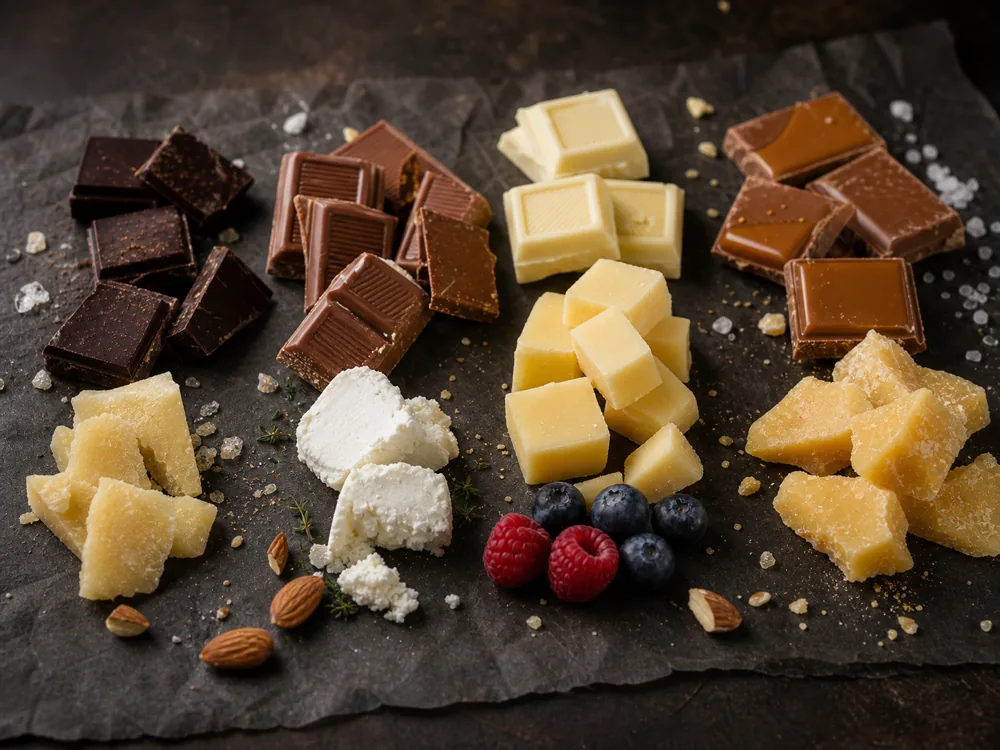
Butler's 70% bar and Galer's 70% preference both sit just under Sennett's 75 to 85% range for dense, nutty cheeses, so these experts land close together without landing on the same number.
Sennett adds that the flavor notes printed on finer bars matter as much as the percentage, because they say which cheese suits the chocolate. A tart, cherry-like chocolate, she says, needs a cheese that complements and contrasts that flavor, such as a sweet, creamy blue.
What Cheese Goes Best with Dark Chocolate?
Meg Quinn, who writes Ain't Too Proud To Meg, gives the clearest reason aged cheese is the usual partner: dark chocolate has less sugar and a richer taste, so it suits the saltier flavors of aged, complex cheeses such as Parmigiano-Reggiano. She uses only the true cheese, never a generic parmesan.
Butler reaches the same family from the cheesemonger's side: he calls Marieke aged Gouda, aged 9 to 12 months, nutty, robust and salty, and pairs it with dark chocolate.
| Pairing | Why It Works |
|---|---|
| Parmigiano-Reggiano + dark chocolate with almonds | Meg Quinn: the almonds echo the cheese's nutty, umami flavor. |
| Marieke aged Gouda (9 to 12 months) + 70% dark chocolate | Austin Coe Butler: a nutty, robust, salty cheese whose flavors blend with the chocolate into something like chocolate ice cream with salted caramel. |
| Aged Gouda + caramel or toffee dark chocolate | Cheesetique: aged Gouda is famous for butterscotch notes, so caramel or toffee chocolate repeats them. |
| Comté + dark chocolate truffle | Jessica Sennett: a classic pairing for a nutty cheese with a supple texture and small tyrosine crystals that give a fruity punch. |
| Cheddar + 70% dark chocolate | Chad Galer: cheddars are typically less acidic, which gives a perception of sweeter flavor, and he prefers a salt-forward 70% bar. |
| Extra sharp white cheddar + dark chocolate with raspberries | Meg Quinn: dark chocolate with raspberries or other fruity flavors. |
The Cheese Wedge, a cheese shop in Sarnia, Ontario, pairs Gruyère with chocolate bars that carry almonds or hazelnuts, and Quinn pairs Gruyère and Gouda with extra dark chocolate with nutty flavors.
Bryn Kirk, passing on California Milk Advisory Board guidance, adds three more dark chocolate matches: aged Gouda with chili peppers, aged Jack with almonds, and Asiago or Fontina with dried fruit.
Butler also carries the same logic to a hard grana-style cheese. He describes BelGioioso American Grana as having intense umami and the sweetness of cooked milk, and matches it with a 64% dark milk chocolate with notes of yogurt, grape candy and ripened bananas.
Which Chocolate Goes with Blue Cheese?
Seven sources name a chocolate for blue cheese, and their advice runs from a 90% dark bar to white chocolate.
| Who Suggests It | Chocolate | Reason Given |
|---|---|---|
| Jessica Sennett, Cheese Grotto | 75 to 90% cocoa with minerality, flint, tart or nutty notes | These notes pair well with blue; her whiskey and sea salt truffle goes with St. Agur |
| Meg Quinn | Extra dark, 70% or higher | Both are strong flavors, so the chocolate can stand up to the cheese |
| Bryn Kirk, passing on California Milk Advisory Board guidance | Dark, 80% or higher | Complex dark chocolate matches complex cheese |
| Matthew Rose | Dark chocolate with Bayley Hazen Blue or Stilton | The milkiness of blue softens and highlights the chocolate's intense notes |
| Cheesetique | Very dark, or white | Dark stands up to the intensity; white is sweet and smooth and balances the piquant qualities |
| The Cheese Wedge | Dark chocolate with sea salt | The tangy, salty cheese is elevated by bittersweet chocolate and a touch of sea salt |
| Austin Coe Butler | 45% malted milk chocolate with Roth Buttermilk Blue | Tangy, salty cheese with sweet malted chocolate; he calls it a milder cheese |
Six of the seven include a dark bar. Butler is the one who goes to milk chocolate, and Cheesetique adds white as a second option.
The dark-chocolate advice mostly argues from strength. Quinn says the chocolate has to stand up to the cheese's stinkiness, and she sums it up as the stinkier the cheese, the darker the chocolate.
The sweeter options argue the reverse, that sweetness rounds out a sharp blue. Butler says bigger, bolder blues can be rounded out nicely with sweetness, and Cheesetique says white chocolate balances the cheese's piquant qualities.
Sennett's whiskey and sea salt truffle shows a third lever. The truffle is boozy and astringent, so she pairs it with St. Agur, a creamy, cratered blue that balances sweet cream and flint, and says the salt on the truffle binds the cheese and chocolate together.
Six of the seven sources name dark chocolate for blue cheese, and the three that give a percentage put it at 70% or higher. Cheesetique's white chocolate and Butler's 45% malted milk chocolate are the sweeter alternatives.
Which Chocolate Goes with Brie and Washed-Rind Cheese?
Brie splits the experts between milk and dark: The Cheese Wedge and Bryn Kirk of Chocolate University Online pair it with milk chocolate, while Quinn pairs Brie and triple cream cheese with dark chocolate with earthy or spicy flavors. The Cheese Wedge adds a touch of honey or a dried fig to its Brie and milk chocolate pairing.
For triple cream cheeses, Cheesetique chooses milk chocolate because both are creamy and luxurious, and Sennett offers either milk chocolate or a bar of 80 to 90% cocoa, describing the cream as a sweet, buttery accent to the astringent, slightly bitter quality of dark chocolate.
Washed-rind cheeses get a middle path. Rose pairs milk chocolate with ones that have a bready, toasty, savory quality, naming Taleggio and Virginia's Grayson, while Sennett puts medium-bodied washed rinds with 60 to 80% cocoa and Cheesetique chooses a moderately dark bar.
Cheesetique explains the balance: the cheese's intense aroma and flavor match robust cocoa, but the pairing also needs some sweetness. Kirk, passing on California Milk Advisory Board guidance, suggests chocolate caramels with a beer-washed cheese.
Which Chocolate Goes with Goat Cheese and Fresh Cheese?
Goat cheese shows how much room the experts leave: Quinn pairs it with milk chocolate, Cheesetique with dark, Sennett with 70 to 80% cocoa, The Cheese Wedge with white chocolate, and Rose with caramel chocolate.
Two lines of reasoning sit behind that spread. Cheesetique says the acidity in fresh or lightly aged goat cheese balances the bitterness of dark chocolate, and Rose says the tangy, citrusy flavors of goat's milk cheese bring levity to caramel while the sweetness plays off the acidity of a fresh cheese.
Quinn reasons from creaminess instead: goat cheese and milk chocolate are both super creamy and slightly sweet, and she adds that goat cheese can take dark or milk chocolate depending on the cheese's flavor.
For the cheese itself, Rose suggests something really bright, such as Chabichou from France or Shabby Shoe from Wisconsin.
Fresh cream cheese is the exception Kirk flags. The California Milk Advisory Board guidance she passes on generally matches complex dark chocolate with aged cheese, but it suggests 60 to 70% dark chocolate with fresh cream cheese and milk chocolate with ricotta.
Does White Chocolate Go with Cheese?
Rose makes the strongest case for it, saying white chocolate has a rich fattiness and a subtle acidity that shine beside a cheese with a clean nuttiness, and he names Emmentaler from Switzerland, Ossau-Iraty from France and Manchego from Spain.
Two other experts use it in different company. Cheesetique offers white chocolate as one of its two options for blue cheese, and The Cheese Wedge pairs it with goat cheese.
The three suggestions share no cheese family, so they read as separate recommendations and not as a rule for white chocolate.
Do Filled and Flavored Chocolates Work with Cheese?
Rose approaches filled chocolates as desserts: cheeses with roasted, savory, nutty flavors that work well with berry fruits and preserves leave him feeling that he has just eaten a delicious pastry or pie.
His examples include raspberry chocolate with Gruyère or Wisconsin's Pleasant Ridge Reserve, and peanut butter chocolate with triple crème Brie, which he compares to a fluffernutter sandwich.
Quinn explains why fillings suit aged cheese: aged cheeses tend to be less acidic, so they pair well with chocolates filled or studded with almonds, honey or maple.
She also pairs truffle cheese with salted caramel chocolate, because the buttery notes of caramel and toffee match the buttery flavor of the cheese. A chocolate that is too sweet, milk chocolate in her example, overpowers that flavor.
- Hibiscus and mint truffle with fresh chèvre: Sennett says the goat cheese accentuates the chocolate's acidity and makes the flavors pop.
- Ginger, turmeric and black pepper truffle with young Taleggio: Sennett says the earthy, spicy chocolate needs a funky, medium-bodied cheese that does not get overwhelmed.
- Harvey Wallbanger truffle with Délice de Bourgogne: Sennett's example of body and flavor matching, with sweet orange notes beside a triple cream.
- Chocolate chilli caramels with Tomme: Cheese.com pairs the sweet and spicy caramels with the fruity, strong cheese and suggests a bite of dark chocolate to offset the cheese's creamy sweetness.
- Hazelnut milk chocolate with Henning's Chipotle Cheddar: Butler's pick, with bacon and maple syrup, which he compares to a rich, complex mole poblano.
- Chocolate with bacon and sharp cheddar: Cheesetique calls the combination life-changing.
Can You Melt Cheese and Chocolate Together?
Cheese.com describes four uses of cheese with chocolate, each given as an idea without amounts.
- Gruyère in hot chocolate: cut into sticks to sip with the drink, or melted into it for a nutty aftertaste.
- Camembert in chocolate dishes: melted into a Colombian hot chocolate, a ganache or chocolate con queso.
- Comté on grilled cheese: hazelnut chocolate spread on the sandwich, where the cheese gives a melted, smoky taste.
- Gouda in a sandwich: paired with milk chocolate for a sweet caramel aftertaste.
The post gives no quantities, temperatures or ratios, so these work as ideas to try and not as tested recipes.
How Do You Build a Chocolate and Cheese Board?
Quinn builds her board in a set order: the prepared cheeses go on evenly spaced first, with hard cheeses sliced and soft cheeses left whole, and the chocolates are placed beside each cheese to lead guests to the intended pairing.
Her example board pairs three cheeses, chèvre, blue cheese and Parmigiano-Reggiano, each with its own chocolate, and adds meats, fruit, herbs or edible flowers, and crackers, crisps or crostini on the side.
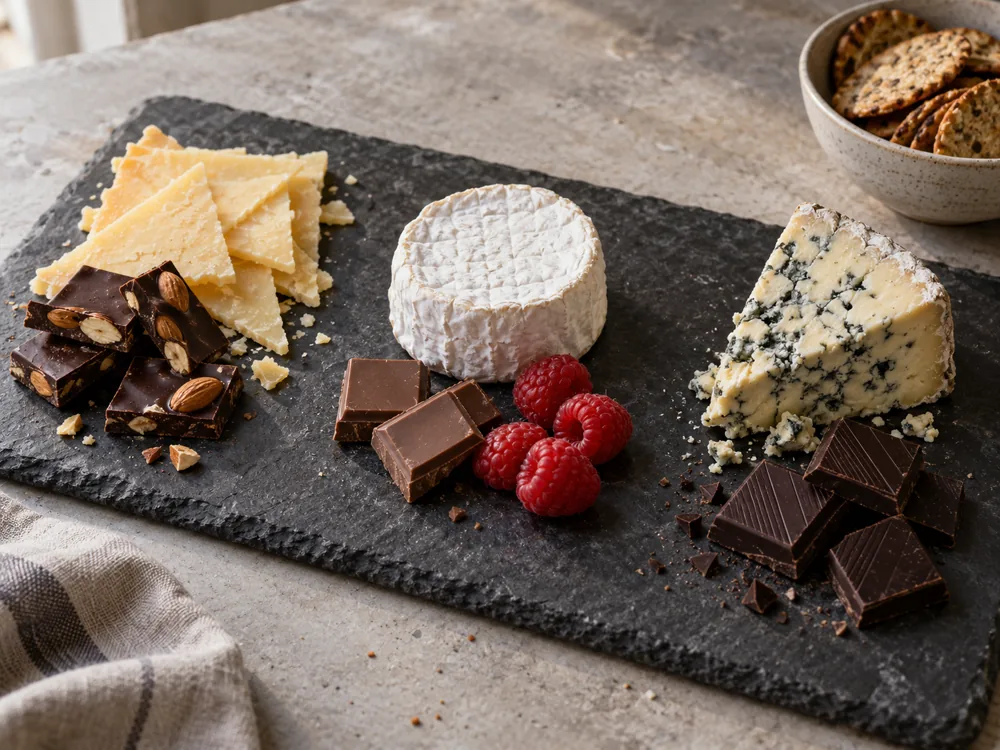
The Cheese Wedge suggests 3 to 5 pairings for variety, cheese at room temperature for flavor, accompaniments such as fresh fruit, nuts, honey or crackers, and a cocoa percentage that complements the cheese.
Galer's platter interleaves cheese with rich dark chocolate chunks and adds dark chocolate covered almonds with sea salt, raisins or fresh grapes, toasted almonds, and sliced bread or crackers. For a drink he suggests a sweet ruby port or a fruit-forward pinot noir or merlot.
What Order Should You Taste Chocolate and Cheese In?
Butler starts with milder milk chocolates and works toward stronger flavors, a habit that follows from the bitterness pitfall he describes.
Quinn gives two habits for each bite: smell the cheese and the chocolate first, because you taste with your nose, and take the cheese before the chocolate, which she finds makes the chocolate taste a little better.
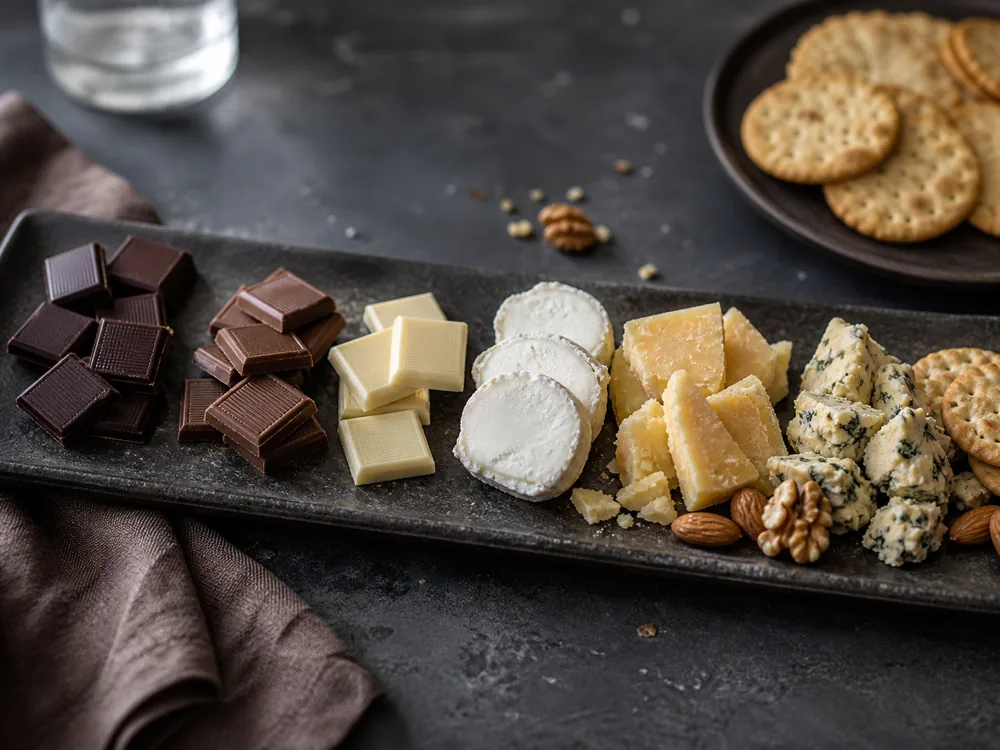
None of the experts lists a full sequence of rounds, so the order below is our reading of Butler's rule applied to their picks, not a tested sequence.
It would put the milk chocolate pairings first, such as goat cheese or Brie with milk chocolate, then a 70% bar with aged Gouda or Parmigiano-Reggiano, and the darkest bar with blue cheese last.
Where Do Chocolate and Cheese Pairings Go Wrong?
Butler names the most common pitfall, which is bitterness: the sharpness in a cheddar or the tanginess of a blue can slip into bitterness beside a darker, tannic chocolate.
Cheddar shows how far the advice diverges, since Quinn, Cheesetique, Galer and The Cheese Wedge all pair it with dark chocolate. Three of the four attach a fruit, nut or salt element to the bar, which is one way to read how they avoid the bitterness Butler describes, though none of them says so.
Sennett's caution is about body: she looks for cheeses with a certain amount of body, and says dry pecorinos and crottins do not often stand up to the body and flavor of chocolate, though every rule is meant to be broken.