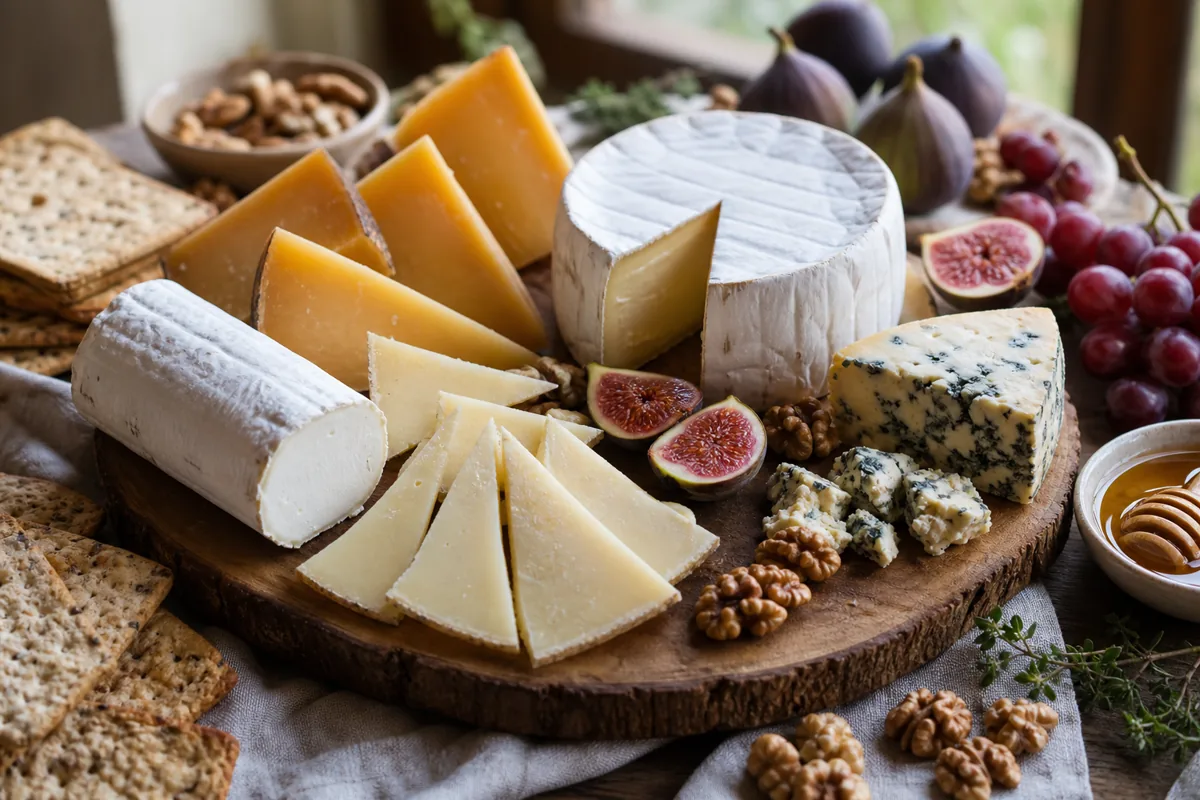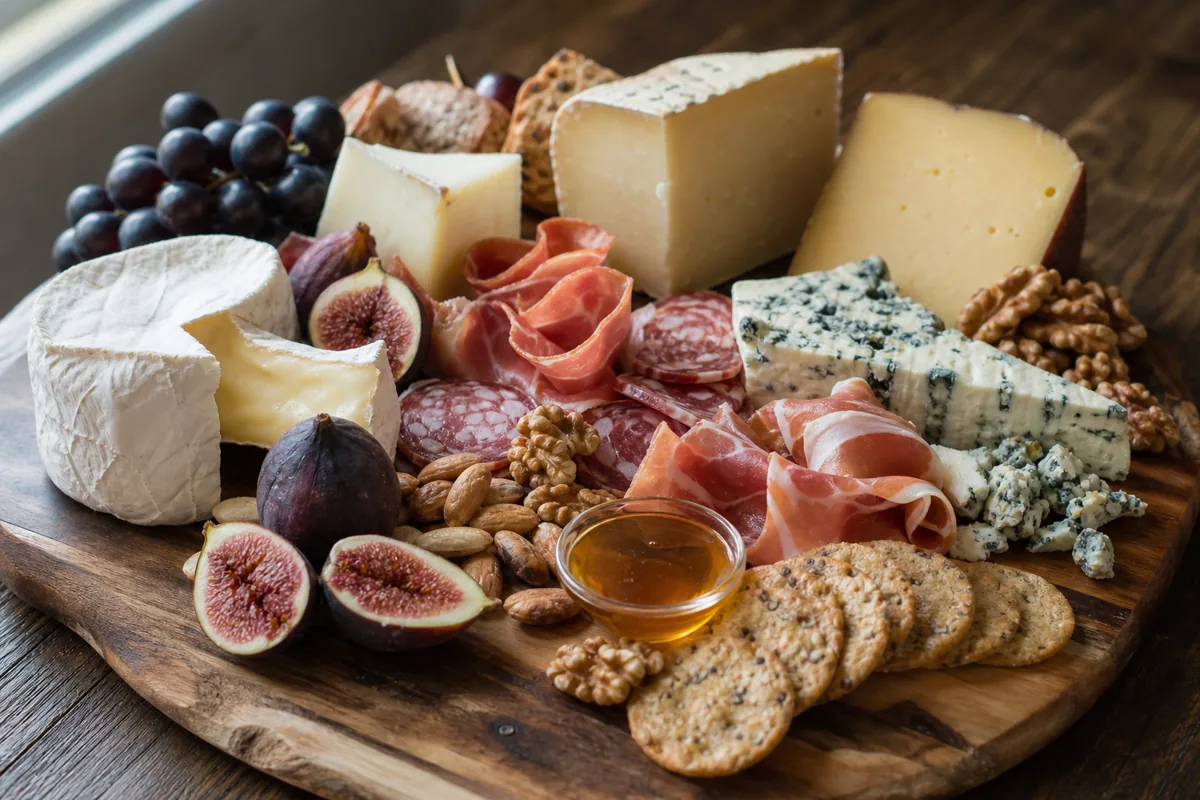
The best charcuterie board usually starts with Brie, then adds one sweet-savory slicer, one firmer salty wedge, and one controlled bold cheese. That mix works because cured meats already bring salt and fat, so the cheese selection has to manage pressure instead of piling on more of the same.
A charcuterie board is not just a cheese board with salami dropped on top. The meats already bring salt, fat, and cured flavor, so the cheeses have to answer a different problem.
That is why the best charcuterie board does not need the biggest names. It needs one creamy cheese that welcomes people in, one firm cheese that slices cleanly beside meat, one drier wedge that sharpens the bite, and one bold corner that guests can approach on purpose.
We ranked these picks by how well they hold their own next to cured meat, fruit, crackers, and condiments. The real job here is meat pressure, not cheese-only contrast.
In This Article
Should You Start a Charcuterie Board With Soft Cheese?
Brie is still the easiest first pick because charcuterie boards need one soft landing spot. It spreads well, looks generous, and calms salty meats instead of competing with them.
After that first soft slot, the board should get firmer and drier, not creamier and busier. Once prosciutto, salami, coppa, or chorizo are already on the plate, the second and third cheeses need to bring shape, slice behavior, and a cleaner finish.
The list is not a command to use all six cheeses. It is a map of the roles that matter most once meat joins the board.
If Brie owns the creamy slot, the next useful move is usually a firmer wedge, not a second soft wheel.
Brie stays on top because charcuterie needs an entry point. A board made only of salty wedges and cured meats can feel impressive but tiring.
Brie gives the plate some mercy without making it dull.
If you dislike Brie, do not replace it with another hard cheese. Replace the job.
Use Camembert for a stronger bloomy-rind version, triple-cream for a richer soft slot, or a mild fresh goat cheese when you want tang instead of mushroomy rind.
The rest of the board should then move away from softness. Aged Gouda gives clean slices and caramel notes.
Manchego gives firm sheep's milk bite. Gorgonzola Dolce gives one optional blue corner without making every bite taste like blue cheese.
Why Does Cured Meat Change Which Cheese You Pick?
The main reason cheese-board advice fails here is simple. On a cheese-only board, the cheese has to create almost all of the contrast.
On a charcuterie board, some of that work is already being done by cured meat, mustard, cornichons, olives, and sweet condiments.
That means the best board is not the one with the most intense cheese. It is the one where salt, softness, slice shape, and richness stop stacking in the same direction.
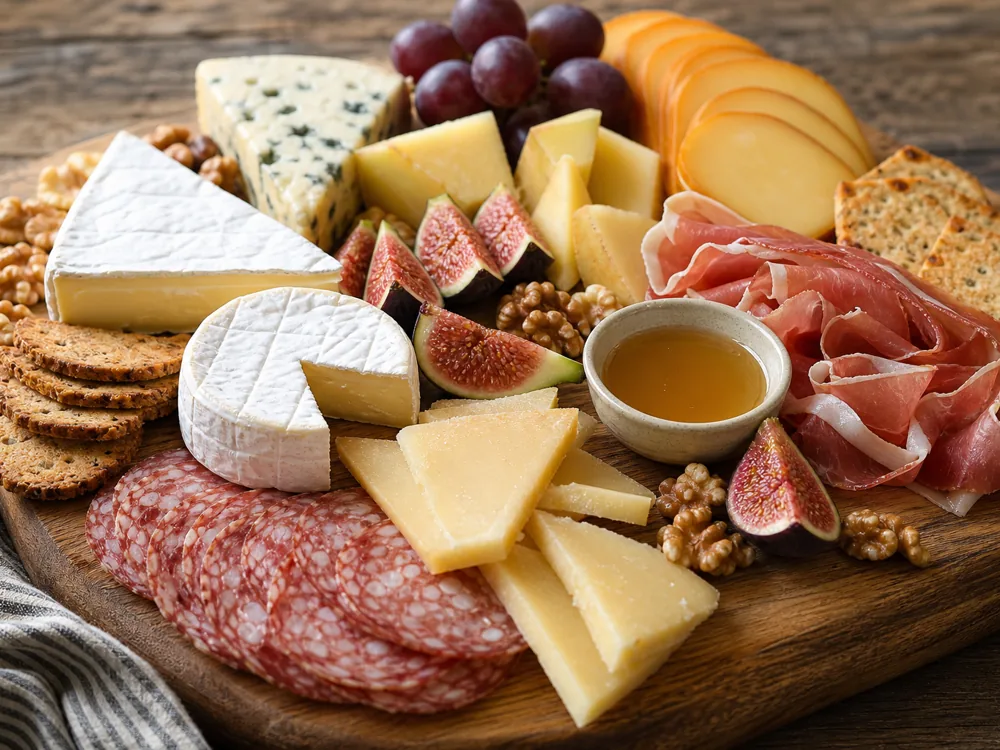
- Soft reset slot: ripe Brie or a small earthier Camembert wheel when you want a richer bloomy-rind cheese.
- Sweet-savory slicer slot: aged Gouda or Comte when the board needs a neat cut and a rounder finish.
- Firm salty wedge slot: Manchego triangles or Parmesan-style shards when the board needs a drier bite.
- Bold corner slot: a mild blue or another controlled strong cheese that guests can choose rather than collide with.
The fastest way to weaken a charcuterie board is to buy two cheeses for the same sentence. Two soft bloomy wheels, two salty hard wedges, or two sweet firm cheeses usually read as repetition, not luxury.
This is also where a charcuterie board parts ways with a cheese-first board. A cheese board builds contrast mostly inside the cheese lineup.
A charcuterie board can let the meat, pickle, and condiment lanes do some of that work, so the cheeses should stop doubling the pressure.
When the meat selection is already intense, soften the cheese lineup. With spicy salami or chorizo, choose Brie, Manchego, and a sweeter Gouda rather than stacking more sharp aged wedges.
With mild ham or prosciutto, you can afford one stronger cheese because the meat is not already pushing spice and salt.
Condiments matter because they reduce the need for extra cheese. Honey can make strong blue cheese easier, mustard can sharpen Brie, and pickles can reset aged Gouda.
If a condiment solves the contrast, you do not need to buy another wedge that repeats the same job.
How Do You Match Cheese to Each Cured Meat Style?
The smartest pairing move is not cheese plus cracker. It is cheese plus the kind of cured meat already on the board.
Thin silky ham wants a different partner than fatty salami or smoked sausage.
Start with the meat that will dominate the table. If the board has prosciutto, the cheese can be softer and rounder.
If the board has chorizo or peppery salami, the cheese needs cleaner edges and enough firmness to stand up to spice.
| Attribute | Cheese | Best Meat Match |
|---|---|---|
| Brie | Creamy, buttery, bloomy-rind soft | Prosciutto, jamon, mild ham, honey |
| Manchego | Firm, nutty, slightly tangy | Chorizo, Serrano, salchichon, quince paste |
| Aged Gouda | Sweet-savory, crystalline, semi-firm | Coppa, soppressata, speck, walnuts |
| Gorgonzola Dolce | Creamy blue, salty, bold | Prosciutto, bresaola, walnuts, honey |
| Sharp Cheddar | Tangy, familiar, firm | Salami, mustard, pickles, apple |
Prosciutto and Brie work because neither one needs to win. The ham brings salt and silk.
The cheese brings fat and calm. That is a better bite than pairing prosciutto with another salty hard wedge that keeps pushing in the same direction.
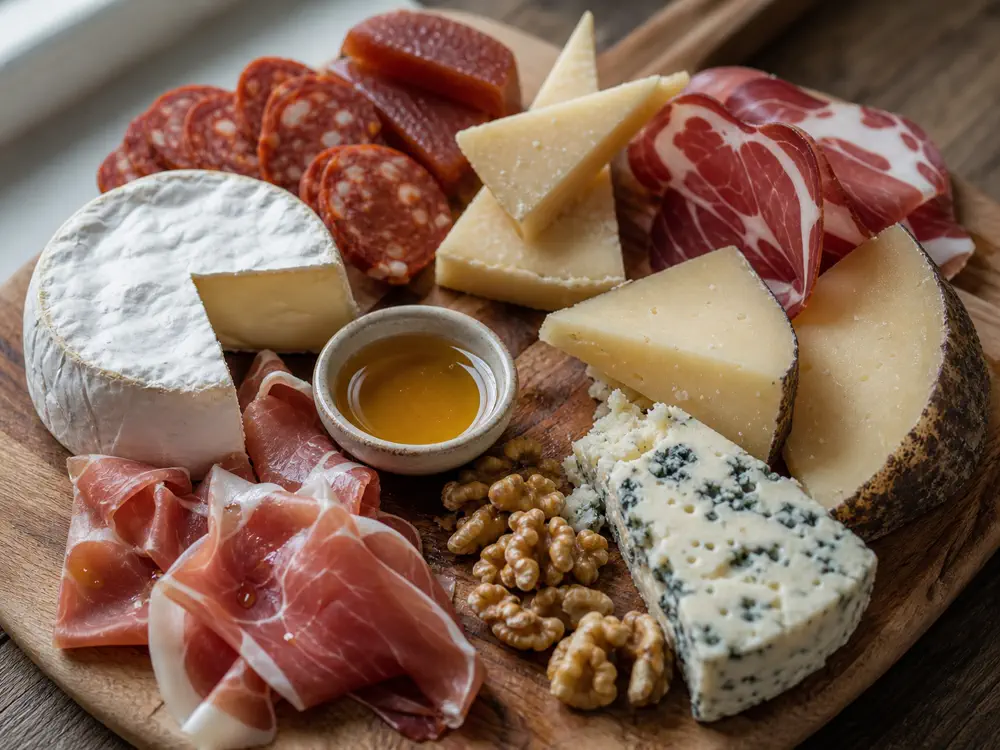
Manchego makes more sense when the board leans Spanish, especially if chorizo, quince paste, and almonds are already nearby. Aged Gouda steps in when the board needs a sweeter, rounder middle next to darker meats like coppa or speck.
For wine support, Brie-friendly bottles stay useful when the board starts with a soft bloomy center. If the board leans sheep's milk and membrillo, Manchego pairing logic is a better guide than generic red-wine instinct.
That same matching logic helps with layout. Put Brie near prosciutto, honey, and plain crackers, then put Manchego near chorizo, almonds, and quince.
Aged Gouda belongs near darker cured meats, walnuts, and dried fruit so guests can find a good bite without solving the whole board themselves.
Which Cheeses Make a Charcuterie Board Feel Repetitive?
Most failed boards are not under-bought. They are over-duplicated.
Good cheese can still be the wrong board cheese when it makes the meat lane heavier, wetter, or more repetitive than it already was.
The easiest warning sign is a board where every bite is salty and dense. If the meats are already cured, the cheese does not need to prove it can be intense.
It needs to create relief, clean cuts, and a few clear turns in texture.
A second warning sign is service mess. Runny Burrata, very wet fresh mozzarella, and loose spreads can be excellent in the right dish, but they usually need a bowl, spoon, or separate plate.
A grazing board works better when guests can cut, lift, and eat without chasing liquid across the board.
- Very wet fresh cheeses: burrata and loose fresh mozzarella usually need their own plate and service rhythm.
- Duplicate soft wheels: Brie plus Camembert can work, but only when the board is intentionally comparing bloomy rind styles.
- Too many salty dry wedges: Parmesan, Pecorino, and an aged Manchego together usually oversalt the same board.
- Very aggressive blue or washed rind: strong Roquefort wedges or ripe washed-rind cheeses can dominate a casual mixed crowd if there is no safe soft lane beside them.
If a cheese needs its own spoon, keeps leaking whey, or makes the whole board smell stronger than the meats, it is probably not the right mixed-board cheese for most guests.
That does not make the cheese bad. It just means the board is the wrong format.
A mixed charcuterie board should invite grazing, not require a cleanup strategy after every bite.
If you really want a wetter cheese, give it its own small dish and keep crackers nearby. Do not put it in the center where it can soak bread, touch cured meat, or make firm cheeses slippery.
- Move wet cheese off-board when it needs a spoon or separate bowl.
- Keep blue cheese at the edge so its aroma does not take over the mild cheeses.
- Limit salty hard wedges when salami, ham, olives, and pickles are already present.
- Use fruit or honey first when the board needs relief, before buying another cheese.
How Many Cheeses and How Much Meat Do You Actually Need?
Most home boards want fewer cheeses than people think. Once cured meat is already doing part of the flavor work, three cheeses can feel complete and four usually feels generous.
The real test is whether each cheese changes the next bite. If the fourth or fifth cheese sounds like another version of one already on the board, spend that money on better ham, better fruit, or a sweeter condiment instead.
For appetizer service, plan smaller than a dinner board. Two to three ounces of cheese per person is usually enough when meat, crackers, nuts, fruit, and condiments are also present.
For a board that replaces dinner, move closer to four ounces of cheese per person and add more bread, fruit, and pickles so the meal does not become only salt and fat.
- 4 to 6 guests: 3 cheeses, about 4 ounces each, plus 2 meats and 3 to 4 accompaniments.
- 8 to 10 guests: 4 cheeses, about 5 ounces each, plus 3 meats and 5 to 6 accompaniments.
- 12 or more guests: 4 to 5 cheeses, about 6 ounces each, plus 3 to 4 meats spread across two board zones.
Cut the first slice before guests arrive, because a whole untouched wheel makes people hesitate. One opened edge tells them the board is ready to eat.
Pre-cutting matters even more on firm wedges like Manchego and aged Gouda. Those cheeses look better when guests can see the intended triangles, batons, or rough shards instead of hacking at the board.
If leftovers matter, paper-first cheese wrapping keeps the wedges in better shape for the next day than tight plastic alone. That is especially helpful when hard edges dry out after party service.
Keep one knife near the soft cheese and another near the firm cheeses. If a blue cheese is on the board, give it its own small knife or spreader.
That keeps the blue flavor from traveling across Brie, Gouda, and Manchego.
What Is the Easiest Grocery-Store Charcuterie Formula?
You do not need a luxury counter to make a strong charcuterie board. You need a formula where the meat and cheese solve different jobs cleanly.
At a supermarket, start with the cheese you can trust freshest. Brie should feel gently springy, not hard in the center or leaking at the edge.
Gouda and Manchego should have clean cut faces. Blue cheese should smell dairy-rich and sharp, not sour or ammonia-heavy.
The best default answer is still Brie plus one sweet firm cheese, one firmer nutty wedge, and one optional bold corner. That covers entry, sliceability, dryness, and contrast without making the board crowded.
For a smaller board, skip the blue before you skip the firm wedge. Brie plus Manchego plus aged Gouda gives guests three different textures and enough range for most cured meats.
Blue cheese is the upgrade when the crowd likes stronger flavors or when honey, pears, and walnuts are already part of the plan.
If you want one safest everyday charcuterie formula
Use: Brie + aged Gouda + Manchego + Gorgonzola Dolce
That mix gives you a soft center, a sweet-savory slicer, a firmer wedge that handles richer meats, and one mild blue corner for contrast without making the board feel aggressive.
If you want a smaller board that still feels complete
Use: Brie + Manchego + aged Gouda
Three cheeses is enough once cured meat is already on the board. This trio covers creamy, firm, and sweet-savory lanes without drifting into duplicate salt or duplicate softness.
If the board still feels flat after that formula, the fix is usually a better condiment or a sharper meat contrast, not a sixth cheese.
SOURCES & REFERENCES
What Else Do People Ask About Charcuterie Board Cheese?
These are the board-building questions that come up once cured meat is already part of the plan.
Brie is the best starting cheese, but the strongest full board usually becomes Brie, aged Gouda, Manchego, and a mild blue like Gorgonzola Dolce. That mix works because it balances the salt and fat already coming from cured meat.
Three cheeses is enough for a small board, and four is the sweet spot for most gatherings. More than that often creates duplication once meat, crackers, fruit, and condiments are already on the plate.
Brie is the easiest answer because its creamy mildness softens prosciutto's salt without making the bite heavy. Mild blue with honey can also work when the board wants a bolder edge.
Yes, but use a mild blue and keep it to one corner. Gorgonzola Dolce is the safest choice for mixed crowds because it adds contrast without turning the whole board aggressive.
Avoid very wet fresh cheeses, duplicate soft wheels, and too many salty hard wedges. Those choices usually make the board messy or repetitive instead of more interesting.